
Introduction
A private jet flight depends on much more than pilots, aircraft, and air traffic control. A large team works on the ground to prepare the aircraft, support passengers, manage baggage, coordinate fuel, and ensure that the flight departs safely and on time.
This collection of services is known as private jet ground handling.
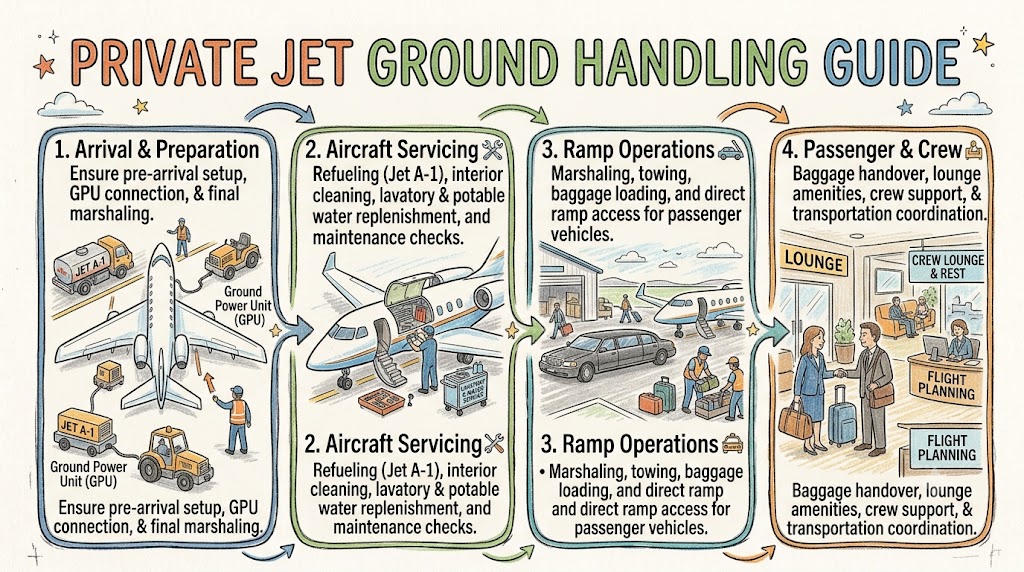
Ground handling begins before an aircraft lands and continues until it departs for its next destination. The process can include passenger reception, aircraft parking, refuelling, catering, baggage loading, cleaning, crew support, customs coordination, and flight documentation.
Efficient ground handling is essential because private aviation passengers expect speed, flexibility, privacy, and professional service. Even a small delay in fuel delivery, baggage loading, or airport clearance can affect the complete travel schedule.
This guide explains how private jet ground handling works, which services are involved, and why coordination is so important in business aviation.
What Is Private Jet Ground Handling?
Private jet ground handling refers to the services provided to an aircraft, its passengers, and its crew while the aircraft is on the ground.
These services are commonly managed by:
- Fixed-Base Operators
- Airport handling companies
- Business aviation service providers
- Charter operators
- Aircraft management companies
- Local airport agents
A ground handler acts as the connection between the aircraft operator, airport authority, passengers, crew, fuel provider, customs officials, caterers, and transport companies.
The main goal is to complete all required tasks safely and efficiently before the next flight.
Why Ground Handling Is Important in Private Aviation
Private aviation operates around individual schedules rather than fixed airline timetables. Passengers may change departure times, request special catering, add baggage, travel with pets, or use smaller airports.
Ground handling teams must therefore remain flexible.
Good ground handling helps provide:
- Faster aircraft turnaround
- Safe ramp operations
- Better passenger service
- Accurate flight coordination
- Reduced delays
- Proper baggage handling
- Reliable fuel delivery
- Crew support
- Regulatory compliance
- Improved aircraft security
Without professional handling, even a fully operational aircraft may not be able to depart on time.
Main Private Jet Ground Handling Services
Private jet ground handling includes several different services. The exact requirements depend on the aircraft, airport, route, passenger needs, and length of stay.
Aircraft Marshalling
Marshalling guides the aircraft safely into its parking position.
A trained ground staff member uses hand signals or illuminated wands to direct the pilots while the aircraft moves on the ramp.
Marshalling helps the aircraft avoid:
- Other aircraft
- Ground vehicles
- Buildings
- Equipment
- Restricted areas
- Ramp obstacles
Once the aircraft is parked, wheel chocks may be placed around the tyres to prevent movement.
Aircraft Parking
The ground handler coordinates a suitable parking position for the aircraft.
Parking arrangements depend on:
- Aircraft size
- Wingspan
- Airport capacity
- Length of stay
- Security requirements
- Hangar availability
- Passenger access
- Weather conditions
Some aircraft remain on an open ramp, while others may be placed inside a hangar.
Long-term parking usually requires advance approval and may involve additional fees.
Passenger Handling
Passenger handling is one of the most visible parts of private aviation ground support.
Services may include:
- Greeting passengers
- Verifying travel documents
- Providing lounge access
- Coordinating security checks
- Escorting passengers to the aircraft
- Arranging customs and immigration
- Supporting elderly travellers
- Assisting families
- Helping passengers with reduced mobility
- Coordinating pet travel
Private jet passengers usually expect fast and discreet service. Ground handlers must therefore combine efficiency with privacy.
Baggage Handling
Private jet baggage is generally transferred directly between the terminal, vehicle, and aircraft.
Ground staff may:
- Collect baggage
- Check baggage quantity
- Confirm special items
- Weigh luggage
- Load bags
- Secure baggage compartments
- Unload bags after arrival
- Transfer luggage to ground vehicles
The handler must work closely with the crew because baggage weight and placement can affect aircraft balance.
Oversized items such as golf clubs, skis, medical equipment, musical instruments, and sports gear should be reported before departure.
Aircraft Refuelling
Fuel coordination is one of the most important ground handling responsibilities.
The ground handler may arrange:
- Fuel truck arrival
- Fuel quantity confirmation
- Fuel type verification
- Refuelling permissions
- Safety zones
- Fuel documentation
- Payment or fuel release
- Final fuel confirmation
The pilots or flight operations team normally determine how much fuel is required.
Refuelling delays can affect departure time, especially at busy airports or locations with limited fuel availability.
Aircraft Cleaning
Aircraft cleaning may be completed during a short turnaround or a longer overnight stay.
Services can include:
- Cabin cleaning
- Carpet vacuuming
- Waste removal
- Restroom servicing
- Galley cleaning
- Window cleaning
- Exterior washing
- Seat preparation
- Linen replacement
- Cabin disinfection
A clean cabin is essential for passenger comfort and aircraft presentation.
Exterior cleaning may require additional approval depending on airport environmental rules.
Catering Coordination
Private jet catering is often arranged through the ground handler.
The handler may coordinate:
- Meal ordering
- Dietary requirements
- Restaurant collections
- Beverage delivery
- Food storage
- Catering security
- Aircraft loading
- Ice and hot water
- Crew meals
- Special celebration requests
Catering must be delivered on time and stored correctly.
Smaller airports may have limited catering options, so advance planning is important.
Ground Power Support
Aircraft systems may require electricity while the engines are off.
A Ground Power Unit, commonly called a GPU, can provide power for:
- Cabin lighting
- Avionics
- Air conditioning
- System checks
- Battery support
- Flight preparation
Using ground power can reduce battery use and avoid running the aircraft’s auxiliary power unit for long periods.
Air Conditioning and Heating
Ground handlers may arrange external air-conditioning or heating equipment to maintain a comfortable cabin temperature.
This is especially useful in:
- Hot climates
- Cold weather
- Long ground stops
- Airports with environmental restrictions
- Aircraft without an operating auxiliary power unit
Climate control helps prepare the cabin before passengers board.
Lavatory and Water Servicing
Private jets may require fresh water and lavatory servicing between flights.
Ground crews may:
- Drain waste tanks
- Clean service points
- Refill approved fluids
- Replenish potable water
- Check for leaks
- Follow hygiene procedures
These services must be completed carefully to avoid contamination or aircraft damage.
Towing and Pushback
Aircraft may need to be repositioned between the ramp, hangar, maintenance area, and departure point.
Ground handlers may use:
- Tow tractors
- Tow bars
- Towbarless vehicles
- Wing walkers
- Brake riders
Towing requires trained staff because incorrect procedures can damage the landing gear or aircraft structure.
De-Icing and Anti-Icing
In cold weather, ice and snow must be removed before departure.
De-icing removes existing contamination, while anti-icing helps prevent new ice from forming for a limited period.
Ground handling teams may coordinate:
- Aircraft inspection
- De-icing trucks
- Fluid selection
- Treatment areas
- Holdover-time information
- Departure timing
- Safety documentation
An aircraft must never depart with unsafe ice, frost, or snow on critical surfaces.
Crew Handling Services
Private jet crews also need ground support.
Crew services may include:
- Transport to hotels
- Hotel reservations
- Crew lounges
- Rest areas
- Catering
- Flight briefing support
- Weather information
- Printing documents
- Visa assistance
- Laundry services
- Local transport
- Airport access passes
Crew duty-time rules are important. Ground handlers may need to arrange accommodation quickly if a crew reaches its legal operating limit.
Customs and Immigration Coordination
International private flights must follow customs, immigration, and border-control procedures.
Ground handlers may help coordinate:
- Passenger manifests
- Crew declarations
- Passport checks
- Visa verification
- Customs forms
- Arrival notifications
- Immigration officers
- Agricultural inspection
- Health documentation
- Pet entry documents
Private jet passengers do not avoid border requirements. However, some airports provide dedicated processing inside the FBO or private terminal.
At smaller airports, customs officials may need to be scheduled in advance.
Flight Documentation and Operational Support
Ground handlers may assist crews and operators with required documentation.
This can include:
- Landing permits
- Overflight permits
- Airport slots
- Parking approvals
- Flight plans
- Fuel releases
- Passenger manifests
- General declarations
- Weather reports
- Notices to airmen
- Handling confirmations
- Airport fee documentation
Incomplete paperwork can delay or prevent departure.
Airport Slots and Prior Permission
Some airports require operators to obtain a landing slot or prior permission before arrival.
A ground handler may assist with:
- Requesting arrival slots
- Requesting departure slots
- Confirming parking
- Updating schedule changes
- Coordinating airport restrictions
- Managing peak-hour limitations
Slot-controlled airports can be difficult for private flights because changes may not always be accepted.
Passengers should therefore understand that private jets cannot always arrive or depart at any time.
Ground Transportation Services
A private aviation ground handler often arranges passenger and crew transport.
Options may include:
- Chauffeur-driven cars
- Luxury vehicles
- Taxis
- Rental cars
- Hotel transfers
- Corporate transport
- Helicopter connections
- Ambulance transfers
- Secure transport
At some airports, vehicles may drive directly to the aircraft. At others, passengers must transfer through the private terminal.
Aircraft Security
Private aircraft may require additional security while parked.
Ground handlers may coordinate:
- Guard services
- Restricted ramp access
- Aircraft seals
- CCTV monitoring
- Secure hangar storage
- Passenger privacy measures
- Vehicle checks
- Access control
Security requirements may be higher for government flights, public figures, valuable cargo, or long-term parking.
Ramp Safety During Ground Handling
The ramp is a busy and potentially dangerous environment.
Aircraft, vehicles, fuel trucks, baggage carts, and ground equipment may all be moving in a limited area.
Important ramp safety practices include:
- Wearing high-visibility clothing
- Following marked routes
- Keeping equipment clear of aircraft
- Using wheel chocks
- Observing engine danger zones
- Preventing foreign object debris
- Maintaining communication
- Following speed limits
- Securing loose equipment
- Using trained personnel
Foreign object debris, often called FOD, can damage aircraft engines, tyres, and surfaces. Ground staff regularly inspect the ramp to remove unsafe objects.
What Is an Aircraft Turnaround?
Aircraft turnaround is the period between arrival and the next departure.
During this time, the handling team may need to complete:
- Passenger disembarkation
- Baggage unloading
- Refuelling
- Cabin cleaning
- Catering replacement
- Water servicing
- Lavatory servicing
- Crew changes
- Passenger boarding
- Flight-document preparation
- Safety inspections
A fast turnaround requires careful coordination.
Tasks must be completed in the correct order without creating safety risks.
Short Turnaround Versus Overnight Handling
Short Turnaround
A short turnaround may last less than an hour.
The main priorities are:
- Passenger transfer
- Fuel
- Baggage
- Catering
- Basic cleaning
- Documentation
- Departure clearance
Overnight Handling
An overnight stay may require:
- Secure parking
- Hangar storage
- Crew accommodation
- Deep cleaning
- Maintenance support
- Battery charging
- Weather protection
- Next-day catering
- Security monitoring
Overnight handling usually involves higher parking and service fees.
Ground Handling at Major Airports
Large international airports often provide extensive business aviation facilities.
Advantages may include:
- 24-hour operations
- Reliable fuel availability
- Full customs services
- Multiple catering providers
- Maintenance support
- Large FBO lounges
- Ground transport options
However, major airports may also involve:
- Higher fees
- Limited parking
- Strict slot controls
- Longer taxi times
- Greater congestion
- Operating restrictions
Private jet operators sometimes use nearby executive airports to avoid these challenges.
Ground Handling at Smaller Airports
Smaller airports can offer:
- Faster access
- Lower congestion
- Easier parking
- Shorter walking distances
- Closer access to destinations
- More flexible operations
However, they may have limited:
- Fuel availability
- Operating hours
- Customs services
- Ground equipment
- Catering
- Maintenance support
- De-icing capacity
Advance coordination is essential when using regional or remote airports.
Private Jet Ground Handling Costs
Ground handling fees vary widely.
The final cost may depend on:
- Aircraft type
- Maximum take-off weight
- Airport location
- Parking duration
- Time of operation
- Passenger count
- Required equipment
- Fuel quantity
- Customs support
- Security services
- Catering
- Ground transport
- Overnight stay
Common charges may include:
- Basic handling fee
- Ramp fee
- Parking fee
- Passenger facility fee
- Ground power fee
- Lavatory service fee
- Water service fee
- De-icing fee
- Towing fee
- Customs overtime fee
- After-hours fee
Operators should request a detailed handling quotation before confirming the flight.
Factors That Can Cause Ground Delays
Even private flights can experience ground delays.
Common causes include:
- Late passengers
- Fuel truck delays
- Missing documents
- Airport congestion
- Slot restrictions
- Baggage changes
- Catering delays
- Customs availability
- Weather
- Technical inspections
- Crew duty limits
- Aircraft parking problems
Clear communication between the operator, crew, passengers, and handler helps reduce these risks.
How to Choose a Ground Handling Provider
A reliable ground handling provider should offer:
- Experience with private aircraft
- Strong safety procedures
- Fast communication
- Transparent pricing
- Trained ramp staff
- Passenger-service experience
- Fuel coordination
- Crew support
- Local airport knowledge
- Emergency assistance
- Customs coordination
- 24-hour availability where needed
Operators should also confirm whether the handler has experience with the specific aircraft type.
Questions to Ask a Ground Handler
Before confirming services, operators may ask:
- Is aircraft parking available?
- What handling fees apply?
- Is fuel available?
- Are customs services available?
- What are the airport operating hours?
- Is ground power available?
- Can you arrange catering?
- Is hangar space available?
- Can you support pets or special baggage?
- Is crew transport available?
- Are there after-hours charges?
- Can vehicles access the aircraft?
- Is de-icing available?
- Are airport slots required?
Clear answers help avoid last-minute operational issues.
Role of an FBO in Ground Handling
A Fixed-Base Operator often acts as the main service centre for private aviation at an airport.
An FBO may provide:
- Passenger lounges
- Crew rooms
- Fuel
- Parking
- Ramp handling
- Ground transport
- Catering coordination
- Flight support
- Customs assistance
- Aircraft servicing
Not every FBO provides every service directly. Some services may be outsourced to approved local companies.
Ground Handling for Medical Flights
Medical and air ambulance flights may require specialized ground support.
This can include:
- Ambulance access
- Stretcher coordination
- Medical team transport
- Oxygen handling
- Priority ramp access
- Hospital transfer
- Patient privacy
- Rapid customs clearance
Medical flights require careful timing because delays may affect patient care.
Ground Handling for Pets
Passengers travelling with pets may require additional support.
Ground handlers may help coordinate:
- Veterinary documents
- Import permits
- Customs inspection
- Pet transport vehicles
- Crate handling
- Water and comfort arrangements
- Quarantine procedures
International pet travel should always be planned well in advance.
Ground Handling Checklist
A basic private jet ground handling checklist may include:
Before Arrival
- Confirm handling request
- Reserve parking
- Arrange fuel
- Confirm customs
- Order catering
- Arrange passenger transport
- Book crew transport
- Confirm airport slots
- Share passenger manifest
After Landing
- Marshal aircraft
- Position wheel chocks
- Assist passengers
- Unload baggage
- Confirm refuelling
- Begin cabin servicing
- Transport crew if required
Before Departure
- Load baggage
- Deliver catering
- Complete documents
- Confirm passengers
- Remove ground equipment
- Complete safety checks
- Confirm departure slot
- Escort passengers to aircraft
Best Practices for Smooth Ground Handling
For efficient operations:
- Send handling requests early.
- Provide accurate aircraft details.
- Confirm passenger numbers.
- Share baggage requirements.
- Arrange special services in advance.
- Verify fuel availability.
- Check airport operating hours.
- Confirm customs requirements.
- Review all charges.
- Maintain direct communication with the handler.
- Update schedule changes immediately.
- Keep backup plans for weather or parking restrictions.
Conclusion
Private jet ground handling is a critical part of every business aviation flight. It brings together passenger services, aircraft support, fuel, baggage, catering, security, crew assistance, and airport coordination. Professional handling helps aircraft operate safely, reduces delays, protects passenger privacy, and creates a smoother travel experience. Careful planning and clear communication are especially important when flying internationally, using smaller airports, or requesting specialized services.
