
Introduction
The cost of cardiac treatment is an important concern for patients and families preparing for surgery. Although India offers cardiac care across government hospitals, private multispecialty hospitals, and advanced cardiac centres, the final expense can vary considerably. The procedure required, the patient’s medical condition, hospital category, city, surgeon’s expertise, implants, room type, and recovery needs can all affect the bill.
Understanding the expected heart surgery cost in India allows families to compare estimates, review insurance coverage, arrange funds, and avoid unexpected expenses. However, treatment decisions should never be based on price alone. The suitability of the procedure, experience of the medical team, hospital infrastructure, patient safety systems, and continuity of follow-up care are equally important.
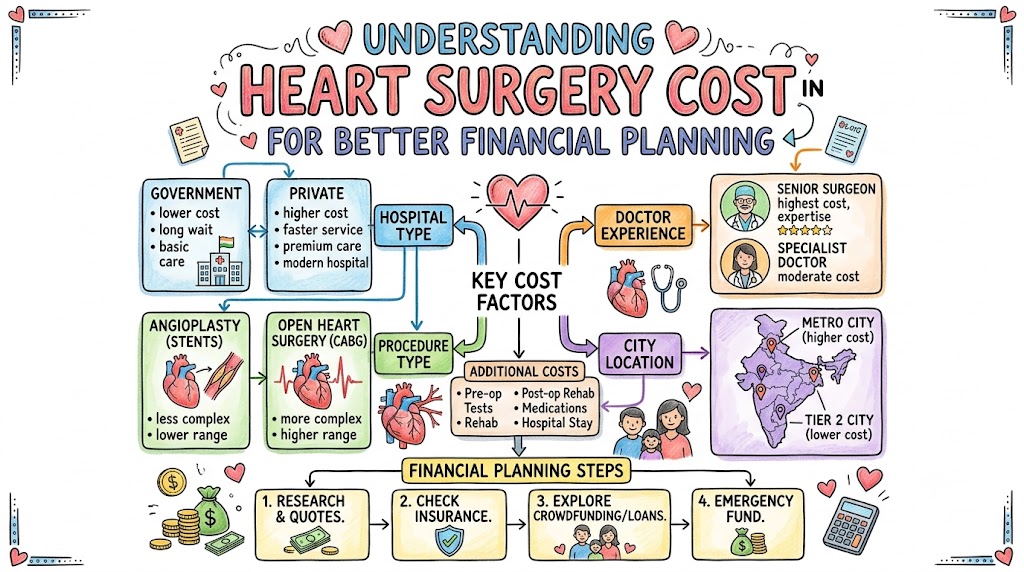
Why Heart Surgery Costs Differ Across India
Heart surgery is not a single treatment with one fixed price. The term may refer to coronary artery bypass grafting, valve repair, valve replacement, congenital heart defect correction, aortic surgery, or another complex cardiac procedure.
Two patients receiving treatment for similar conditions may receive different estimates because their clinical needs are not identical. One patient may require a straightforward planned procedure, while another may need multiple grafts, advanced implants, prolonged intensive care, or treatment for additional health conditions.
Published Indian cost guides show broad variation even for common procedures. For example, quoted CABG costs range from approximately ₹1.5 lakh to ₹7 lakh, depending on the source, hospital, complexity, and package inclusions. Angioplasty estimates commonly range from around ₹1.5 lakh to ₹4 lakh. These figures are indicative and should not be treated as guaranteed hospital prices.
Indicative Heart Procedure Costs in India
The following ranges can provide a starting point for financial planning. Actual charges may be lower or higher after the cardiologist and cardiac surgeon evaluate the patient.
| Cardiac procedure | Indicative private-hospital range | Major cost considerations |
|---|---|---|
| Coronary angioplasty with stenting | ₹1.5 lakh–₹4 lakh | Number and type of stents, emergency admission and lesion complexity |
| Bypass surgery or CABG | ₹1.5 lakh–₹7 lakh | Number of grafts, surgical technique, ICU stay and medical condition |
| Heart valve repair | ₹2.4 lakh–₹5.7 lakh | Valve involved, complexity of repair and hospital category |
| Heart valve replacement | ₹1.8 lakh–₹8 lakh or more | Mechanical or tissue valve, number of valves and surgical approach |
| Congenital heart defect repair | ₹3.2 lakh–₹4.9 lakh | Type of defect, patient’s age and procedural complexity |
| Aortic aneurysm repair | ₹5.6 lakh–₹11.5 lakh | Location of aneurysm, graft requirement and intensive care |
| TAVI or advanced transcatheter valve treatment | ₹15 lakh–₹33 lakh | Imported device, specialised cardiac team and advanced infrastructure |
| Heart transplant | ₹18 lakh–₹35 lakh or more | Donor process, surgery, prolonged care and post-transplant treatment |
These ranges combine publicly available estimates and should be used only for preliminary budgeting. Hospitals may revise their charges, and final prices depend on the patient’s diagnosis and treatment plan.
Main Factors Affecting Heart Surgery Cost
1. Type of cardiac procedure
A standard bypass operation, valve replacement, congenital defect repair, and heart transplant require different equipment, specialists, operating time, and recovery support. More complex procedures generally involve higher costs.
Even within CABG surgery, expenses can change according to the number of blocked arteries, grafts required, and whether traditional, off-pump, or minimally invasive surgery is recommended.
2. Severity of the patient’s condition
Patients with diabetes, kidney disease, lung problems, uncontrolled blood pressure, previous cardiac surgery, or advanced heart failure may require additional tests and monitoring.
A medically complex patient may need:
- Longer operating time
- Additional specialists
- More intensive postoperative monitoring
- Extended ICU admission
- Blood products or advanced medication
- Additional procedures during the same admission
These requirements can increase the final hospital bill.
3. Planned versus emergency admission
A planned operation usually allows time for medical evaluation, insurance approval, package comparison, and financial arrangements. Emergency cardiac treatment may require immediate admission, urgent diagnostics, critical care, and priority operating-theatre access.
Families should never delay emergency treatment to negotiate costs. Symptoms such as severe chest pressure, sudden breathlessness, fainting, heavy sweating, or pain spreading to the arm, jaw, shoulder, or back require immediate medical evaluation.
4. Hospital type and location
The cost of treatment may differ among:
- Government hospitals
- Charitable cardiac institutions
- Teaching hospitals
- Private multispecialty hospitals
- Premium super-specialty cardiac centres
Hospitals in major metropolitan areas may have higher room, staffing, and infrastructure charges. However, city should not be considered separately from expertise. Complex patients may benefit from treatment at a centre with advanced cardiac surgery, intensive care, blood-bank support, imaging, and emergency services.
5. Surgeon and medical-team charges
A heart operation involves more than one surgeon. The medical team may include:
- Cardiothoracic surgeon
- Assistant surgeons
- Cardiac anaesthesiologist
- Perfusionist
- Critical-care specialists
- Cardiologists
- Nurses and rehabilitation professionals
Patients should ask whether all professional fees are included in the quoted package.
6. Implants, stents and medical devices
Implants may represent a significant part of the treatment expense. These may include coronary stents, artificial valves, grafts, pacemakers, closure devices, or other specialised equipment.
For angioplasty, the number and model of stents directly influence the bill. Publicly disclosed hospital pricing shows that coronary stent prices differ according to category and manufacturer, even where regulated ceiling prices apply.
7. ICU and hospital stay
Cardiac surgery generally requires postoperative monitoring in an intensive care or cardiac care unit. The total expense may rise when a patient needs:
- Ventilator support
- A longer ICU stay
- Treatment for infection
- Dialysis
- Repeat imaging
- Additional surgery
- Management of rhythm problems or bleeding
Families should ask how many ICU and ward days are included in the package and how additional days are charged.
8. Room category
Private-room, deluxe-room, and suite charges may be substantially higher than shared-room or general-ward charges. Under some health insurance policies, selecting a room above the eligible limit can also affect the reimbursement of related hospital charges.
Review the room-rent conditions before admission rather than assuming the insurer will cover every category.
Expenses That May Be Included in a Surgery Package
A cardiac surgery package may include several hospital services, but inclusions differ between institutions.
| Usually included or partially included | Frequently excluded or limited |
|---|---|
| Standard surgeon and anaesthesia fees | Treatment of unrelated medical conditions |
| Operating-theatre charges | Additional procedures not listed in the estimate |
| Standard ICU and ward stay | Extra ICU or hospital days |
| Routine nursing care | Premium room upgrades |
| Basic medicines and consumables | High-cost or special medicines |
| Routine preoperative investigations | Tests performed before package admission |
| Standard blood requirements | Large or unusual blood-product requirements |
| Basic postoperative monitoring | Readmission after discharge |
| Standard implant, when specified | Premium, imported or additional implants |
| Discharge medicines for a limited period | Long-term medication and rehabilitation |
Patients should obtain the inclusions and exclusions in writing. A verbal “package price” may not clearly explain how complications, additional implants, or an extended stay will be billed.
Hidden and Post-Discharge Costs to Consider
Financial planning should not end with the surgery estimate. Patients may also need to budget for:
Preoperative expenses
These can include consultations, blood tests, echocardiography, coronary angiography, CT scans, pulmonary evaluation, dental clearance for selected valve procedures, and specialist opinions.
Travel and accommodation
Families travelling to another city may need to pay for transportation, accommodation, meals, and local travel. International patients may also need to consider visa-related expenses, interpreter support, airport transfers, and an extended stay after discharge.
Medicines after surgery
Patients may require antiplatelet medicines, anticoagulants, blood-pressure medicines, cholesterol-lowering drugs, pain relief, and medicines for diabetes or other conditions.
The type and duration of medication depend on the procedure and the patient’s health. Medicines should never be stopped or changed without medical advice.
Follow-up consultations
Postoperative reviews, blood tests, wound checks, ECGs, echocardiograms, and anticoagulation monitoring may create additional expenses.
Cardiac rehabilitation
Rehabilitation may include supervised exercise, breathing exercises, dietary guidance, psychological support, risk-factor management, and education about returning to normal activity.
Loss of income
Patients and caregivers may need time away from work. Household budgeting should account for reduced income during hospitalisation and recovery, particularly when the patient is the primary earner.
How to Request a Transparent Hospital Estimate
Before confirming treatment, ask the hospital for a written estimate that clearly states:
- Exact name of the recommended procedure
- Surgeon and assistant-surgeon fees
- Anaesthesiologist and perfusion charges
- Operating-theatre expenses
- Expected ICU and ward duration
- Room category included in the package
- Implant, valve, graft or stent included
- Medicine and consumable limits
- Blood-product charges
- Preoperative test coverage
- Charges for additional ICU or ward days
- Treatment of complications
- Follow-up visits included after discharge
- Refund policy when fewer services are used
- Payment schedule and deposit requirements
Comparing two estimates is meaningful only when both cover the same procedure, room type, implant, hospital-stay duration, and professional fees.
Health Insurance and Heart Surgery
Health insurance may cover eligible inpatient cardiac procedures, but the amount paid depends on the policy terms. Patients should check:
- Total sum insured
- Remaining coverage for the policy year
- Network-hospital status
- Cashless-treatment availability
- Pre-existing disease waiting period
- Procedure-specific sublimits
- Room-rent restrictions
- Implant limits
- Co-payment requirements
- Deductibles
- Pre- and post-hospitalisation benefits
- Exclusions and non-medical items
Do not rely only on a hospital employee’s verbal assurance. Contact the insurer or third-party administrator and obtain written pre-authorisation wherever possible.
Cashless approval is not always equal to full bill approval. The patient may still need to pay deductibles, co-payments, excluded consumables, non-medical items, room upgrades, or charges exceeding the approved amount.
Government Health Schemes and Financial Support
Eligible patients may receive support through central or state health schemes. Ayushman Bharat Pradhan Mantri Jan Arogya Yojana provides eligible beneficiaries with coverage of ₹5 lakh per family per year for secondary and tertiary hospitalisation through empanelled facilities. Eligibility, procedure packages, empanelment, and state implementation should be confirmed before admission.
Government package rates are not the same as unrestricted private-hospital prices. For example, published AB PM-JAY package documents assign predefined rates to covered cardiac procedures and may separately map certain implant costs.
Patients can also explore:
- State health assurance schemes
- Central or state government employee schemes
- Employees’ State Insurance benefits
- Employer-provided group insurance
- Charitable hospital assistance
- Hospital social-work departments
- Recognised medical relief funds
Approval should be secured before treatment whenever the patient’s medical condition allows.
Practical Financial Planning for Heart Surgery
Create a complete treatment budget
Divide the budget into:
- Pre-admission tests
- Hospital package
- Possible additional hospital charges
- Post-discharge medicines
- Follow-up care
- Rehabilitation
- Travel and accommodation
- Household expenses during recovery
Keep a contingency reserve
A hospital estimate is not always the final bill. Keeping a reasonable emergency reserve can help cover an extended stay, additional tests, or treatment changes.
Compare value rather than the lowest price
The cheapest estimate is not necessarily the safest or most economical option. Reoperation, unmanaged complications, inadequate intensive care, or poor follow-up can create greater health and financial burdens.
Compare hospitals based on:
- Cardiac surgeon’s relevant experience
- Experience with the exact procedure
- Dedicated cardiac ICU
- Anaesthesia and critical-care support
- Infection-control systems
- Availability of emergency services
- Blood-bank support
- Rehabilitation and follow-up arrangements
- Transparency of the estimate
Organise all medical and financial documents
Keep digital and printed copies of:
- Medical reports
- Prescriptions
- Hospital estimates
- Insurance policy
- Cashless authorisation
- Identity documents
- Payment receipts
- Implant stickers and invoices
- Discharge summary
- Final itemised bill
These records may be required for insurance claims, follow-up treatment, tax documentation, or future medical consultations.
Common Financial Planning Mistakes
Choosing a hospital only because its quote is lower
A low estimate may exclude implants, surgeon fees, intensive care, medicines, or additional hospital days.
Ignoring insurance sublimits
A policy with a high total sum insured may still contain room, implant, co-payment, or procedure-related restrictions.
Failing to plan for recovery expenses
Medicines, rehabilitation, follow-up tests, travel, and loss of income can create a significant post-discharge burden.
Paying without requesting an itemised estimate
Patients should understand what each deposit or package payment covers.
Delaying medically necessary care
Financial comparison is useful for planned treatment, but urgent cardiac symptoms require immediate care. Cost research should never delay emergency evaluation.
Questions to Ask the Cardiac Surgeon
Before discussing cost with the billing department, understand the medical plan by asking:
- What exact procedure is recommended?
- Why is this procedure suitable for me?
- Are there medically appropriate alternatives?
- Is the surgery urgent or can it be planned?
- Will I need one procedure or a combination of procedures?
- What implant, valve, graft, or device will be used?
- How long might I stay in the ICU and hospital?
- What complications could extend the stay?
- What follow-up and rehabilitation will be required?
- What expenses are likely after discharge?
These questions help families create a budget based on the actual treatment plan rather than a general internet estimate.
Frequently Asked Questions
1. What is the average heart surgery cost in India?
There is no single average applicable to every patient. Common procedures may cost a few lakh rupees, while complex aortic surgery, transcatheter valve treatment, or transplantation may cost considerably more. The final amount depends on the procedure, hospital, city, implants, patient condition, and recovery requirements.
2. How much does bypass surgery cost in India?
Published estimates vary widely, with commonly quoted private-hospital ranges extending from approximately ₹1.5 lakh to ₹7 lakh. Patients should obtain an individualised estimate after evaluation by a cardiac surgeon.
3. Is angioplasty cheaper than bypass surgery?
Angioplasty may have a lower initial cost and shorter hospital stay in some cases, but this is not universally true. Multiple stents, complex blockages, or emergency treatment can increase the expense. The appropriate procedure must be selected according to medical need, not price alone.
4. Does health insurance cover heart surgery?
Many policies cover medically necessary inpatient cardiac treatment, subject to waiting periods, exclusions, sublimits, deductibles, co-payments, and network requirements. The policyholder should obtain pre-authorisation and review the written terms.
5. Are cardiac stents included in angioplasty packages?
Some packages include a specified stent, while others bill the stent separately. Ask for the stent brand, model, quantity, disclosed price, and whether additional stents will create extra charges.
6. Why can the final bill exceed the hospital estimate?
The bill may increase because of complications, extra ICU days, additional tests, high-cost medicines, blood products, additional implants, or a change in the surgical plan.
7. Are government hospitals less expensive?
Government and publicly supported hospitals may offer subsidised treatment, but eligibility, availability, waiting time, and package rules vary. Patients should confirm the procedure, specialist availability, and expected schedule directly with the institution.
8. How can international patients plan their budget?
International patients should include treatment, diagnostics, accommodation, local transportation, travel for a companion, visa requirements, postoperative stay, medicines, and follow-up arrangements in their budget.
9. Should patients choose the hospital offering the lowest price?
No. Cost should be considered together with the surgeon’s relevant experience, hospital infrastructure, intensive-care support, safety standards, transparency, and follow-up services.
10. How much emergency money should a family keep?
The amount depends on insurance coverage and the complexity of treatment. A practical plan should include funds beyond the quoted package for excluded items, travel, recovery, and unexpected clinical needs.
Key Takeaways
- Heart surgery cost in India varies according to the procedure, hospital, city, patient condition, implants, and duration of care.
- Internet cost ranges are useful for preliminary planning but are not guaranteed quotations.
- Patients should request a detailed written estimate with clear inclusions and exclusions.
- Insurance approval may not cover the complete bill.
- Post-discharge medicines, rehabilitation, travel, and loss of income should be included in the budget.
- Government schemes may help eligible patients access covered cardiac procedures.
- Medical expertise, patient safety, infrastructure, and follow-up care should be considered alongside price.
- Emergency cardiac treatment should never be delayed for cost comparison.
Conclusion
Understanding the heart surgery cost in India gives patients and families greater control over financial preparation, hospital comparison, insurance coordination, and recovery planning. The most effective approach is to begin with a clear medical diagnosis, obtain an individualised treatment plan, request itemised estimates, check insurance or scheme eligibility, and reserve funds for post-discharge care. While affordability is important, the final decision should balance cost with clinical expertise, hospital safety, appropriate infrastructure, and continuity of treatment. Careful planning can reduce uncertainty and help families focus more confidently on the patient’s treatment and recovery.
