
Introduction
Heart surgery is only one stage of treatment. The days and weeks afterward are equally important because the body needs time, monitoring, rehabilitation, and practical support to heal. Patients may worry about pain, wound care, movement, medicines, diet, sleep, and possible complications. Families may also be unsure about the help required at home.
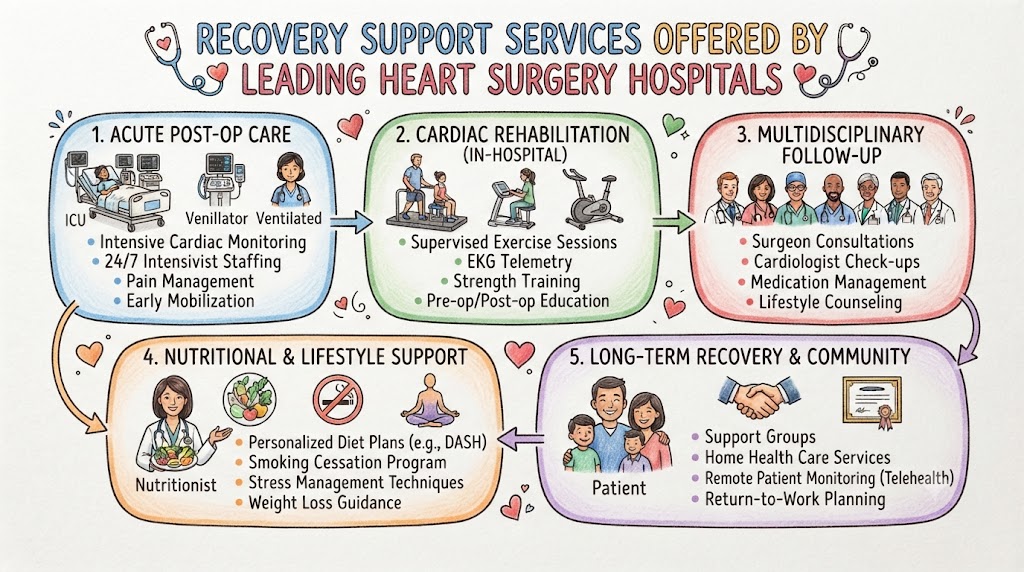
Leading heart surgery hospitals usually organize recovery through a coordinated team. Services may include cardiac intensive care, physiotherapy, rehabilitation, nursing education, medication review, nutrition counseling, emotional support, discharge planning, and follow-up. Cardiac rehabilitation is a medically supervised program combining activity, education, risk-factor management, and emotional support.
Because services vary, patients should compare the full recovery pathway rather than judging a hospital only by the operation.
Why Recovery Support Matters
Recovery after bypass surgery, valve surgery, congenital heart surgery, or another cardiac procedure differs from person to person. Age, general health, surgical technique, complications, heart function, and incision type can influence progress.
A structured program helps patients understand what is expected, which symptoms need attention, and how activity should increase. It also connects the cardiac ICU, ward, outpatient clinic, rehabilitation center, and home. Recovery after open surgery often takes several weeks or longer, while some minimally invasive or catheter-based procedures may allow quicker progress. Exact timelines must come from the treating team.
International patients may need additional help with accommodation, travel fitness, record transfer, and follow-up after returning home.
Immediate Post-Operative Monitoring
After major heart surgery, patients are generally moved to a cardiac intensive care unit or another closely monitored area. The team may monitor heart rhythm, blood pressure, breathing, oxygen, fluid balance, urine output, bleeding, pain, and neurological status.
Support at this stage can include ventilator care, pain control, blood tests, imaging, infection prevention, and early management of bleeding or abnormal heart rhythms. Nurses, intensivists, surgeons, anesthetists, and physiotherapists may all contribute.
Patients comparing hospitals should ask whether there is a dedicated cardiac ICU, round-the-clock emergency cover, and staff experienced in complex post-surgical care.
Step-Down Care and Early Movement
When the patient is stable, care usually moves to a cardiac ward. Nurses and physiotherapists help the patient sit, stand, walk short distances, perform breathing exercises, and gradually resume basic activities.
Movement is increased carefully according to circulation, breathing, balance, pain, and surgical progress. Walking is commonly encouraged after discharge, beginning slowly and increasing only with medical guidance.
After a sternotomy, staff may teach safe ways to get out of bed, cough, use stairs, and protect the healing breastbone. Restrictions on lifting, driving, work, and exercise must be individualized.
Main Recovery Support Services
| Recovery service | Typical support | Why it matters |
|---|---|---|
| Cardiac rehabilitation | Supervised exercise, education, and risk-factor control | Supports a structured return to activity |
| Physiotherapy | Breathing exercises, walking, posture, and mobility | Promotes strength and independence |
| Nursing education | Wound care, hygiene, and symptom monitoring | Prepares patients and caregivers for home |
| Medication support | Prescription review and timing instructions | Helps prevent medicine errors |
| Nutrition counseling | Meal planning and salt or fluid advice | Supports healing and heart health |
| Emotional support | Screening, counseling, and caregiver guidance | Addresses fear, stress, or low mood |
| Follow-up coordination | Appointments, tests, and rehabilitation referrals | Maintains continuity after discharge |
Cardiac Rehabilitation
Cardiac rehabilitation is more than an exercise program. Comprehensive care may include an assessment, supervised aerobic activity, strength training when appropriate, blood pressure and diabetes management, nutrition counseling, tobacco-cessation support, weight management, education, and psychosocial care.
The team may include cardiologists, nurses, physiotherapists, exercise specialists, dietitians, psychologists, and pharmacists. Programs can be hospital-based, outpatient, home-based, or supported by telehealth.
Not every patient starts at the same time. Enrollment depends on the procedure, wound healing, physical stability, mobility, and the surgeon’s approval. Patients should ask whether rehabilitation is arranged before discharge or must be organized separately.
Wound Care and Infection Prevention
Hospitals should teach patients how to inspect and care for chest, leg, or catheter-entry wounds. Instructions may cover bathing, dressings, clothing, hand hygiene, and follow-up for stitches or staples.
Increasing redness, warmth, swelling, wound separation, fever, or yellow or green discharge may require prompt medical advice. New chest pain not related to the incision, worsening breathlessness, fainting, or severe weakness may require urgent assessment.
Patients should leave with written instructions and a contact number explaining which symptoms require routine review, same-day advice, or emergency care.
Pain, Sleep, and Fatigue Support
Pain control helps patients breathe deeply, walk, cough, and sleep. Recovery teams may use prescribed medicines, positioning advice, and activity guidance.
Fatigue and disturbed sleep can occur after major surgery. Patients need practical advice on balancing rest with gradual movement. They should understand how long pain medicines are intended for, which side effects to report, and whether over-the-counter products could interfere with cardiac treatment.
Pain that persists or worsens should be discussed with the team, especially when accompanied by fever, wound changes, breathlessness, or an altered heartbeat.
Medication Education
Discharge medicines may differ from those used before surgery. Depending on the operation and diagnosis, treatment may include antiplatelet medicine, anticoagulation, cholesterol-lowering therapy, blood-pressure medicine, pain relief, or other drugs.
Patients should receive clear information about the purpose, dose, timing, duration, interactions, missed doses, side effects, required blood tests, and who can approve changes. They should not stop or alter cardiac medicines without professional guidance. Follow-up communication helps reduce medication errors.
Nutrition and Lifestyle Counseling
Appetite may be reduced for a short time after surgery. Dietitians can help patients meet energy and protein needs while planning for long-term heart health. Advice may cover salt, fluids, blood sugar, weight, constipation, cultural food preferences, and food interactions with anticoagulants.
Guidance should be individualized. A patient with diabetes, kidney disease, heart failure, low body weight, or poor appetite may require a different plan. Hospitals may also provide tobacco-cessation support and education about blood pressure, cholesterol, and diabetes management.
Emotional and Family Support
Heart surgery can affect emotional well-being. Some patients experience anxiety, irritability, sadness, poor sleep, reduced confidence, or fear of another heart problem. Hospitals may provide psychological screening, counseling, social work, support groups, spiritual care, or referrals.
Cardiac rehabilitation often includes stress management because recovery involves both physical and emotional adjustment. Persistent depression, panic, hopelessness, or difficulty functioning should be discussed with a healthcare professional.
Caregivers also need guidance about transport, meals, medication schedules, activity restrictions, and emergency contacts.
Discharge Planning and Home Coordination
Discharge should be a planned transition. The team should check whether the patient can move safely, manage medicines, eat adequately, care for the wound, and access help at home.
| Before leaving hospital | Support patients should receive |
|---|---|
| Medical review | Confirmation that wounds, pain, mobility, and vital signs are stable |
| Discharge summary | Procedure, medicines, results, restrictions, and follow-up plan |
| Caregiver instruction | Help with meals, bathing, activity, transport, and warning signs |
| Appointment schedule | Surgeon, cardiologist, wound, anticoagulation, or rehabilitation visits |
| Emergency plan | Contact details and instructions for urgent symptoms |
| Travel planning | Advice on local stay, road or air travel, and medical clearance |
| Record transfer | Copies of reports, imaging, operative notes, and prescriptions |
Doctors, nurses, pharmacists, physiotherapists, and social workers may contribute to discharge planning. Patients should know whom to call when a concern develops after leaving the hospital.
Follow-Up and Remote Support
Follow-up may include wound checks, blood tests, electrocardiograms, imaging, anticoagulation monitoring, medicine adjustments, and reviews of symptoms or activity. Some hospitals use calls, patient portals, wearable devices, or video consultations for patients living far away.
Remote support improves convenience but does not replace urgent in-person assessment for serious symptoms. International patients should request a written plan explaining which reviews can be completed locally and when the operating hospital must be contacted.
Comparing Recovery Services Between Hospitals
Patients should look beyond operating-room technology and assess whether the hospital offers:
- A dedicated cardiac ICU and trained post-operative nurses
- Procedure-specific physiotherapy and cardiac rehabilitation
- Instructions in a language the patient understands
- Dietitian, pharmacist, psychological, and social-work services
- Clear emergency contacts and coordinated follow-up
- Transparent information about recovery costs
- Support for caregivers and international patients
- Second-opinion access when recovery is complex
The right choice depends on medical needs, location, support at home, and the ability to attend rehabilitation.
Questions to Ask Before Choosing a Hospital or Surgeon
- Which recovery services are routinely included?
- Does the hospital have a dedicated cardiac ICU?
- When will physiotherapy and walking begin?
- Is cardiac rehabilitation arranged before discharge?
- Who teaches wound care and medication management?
- What warning signs require urgent attention?
- Who supervises follow-up after surgery?
- Which rehabilitation and follow-up costs are included?
- How long should the patient remain near the hospital?
- Can the team coordinate with our local cardiologist?
- Is emotional or caregiver support available?
- Who can be contacted at night or during an emergency?
Frequently Asked Questions
1. What is heart surgery recovery support?
It is coordinated medical, physical, emotional, and practical care after surgery. It can begin in intensive care and continue through rehabilitation, follow-up visits, and home recovery.
2. Does every patient need cardiac rehabilitation?
It is often recommended after cardiac surgery, but suitability and timing depend on the procedure, medical condition, mobility, and specialist assessment.
3. How soon can a patient walk?
Assisted movement often begins in the hospital once the patient is stable. Timing and distance depend on breathing, circulation, balance, pain, and clinical progress.
4. How long does recovery take?
Recovery may take weeks to months. Open surgery generally requires longer healing than some minimally invasive or catheter-based procedures. The surgeon should provide an individual timeline.
5. What help is needed at home?
Caregivers may assist with meals, transport, medicines, appointments, wound observation, and daily activities. They should also understand the emergency plan.
6. Are mood changes common?
Temporary worry, frustration, tearfulness, or sleep problems can occur. Persistent depression, panic, hopelessness, or difficulty managing daily life requires professional attention.
7. Which wound changes should be reported?
Increasing redness, warmth, swelling, separation, unusual pain, fever, or discharge should be reported according to the hospital’s instructions.
8. Can international patients rehabilitate at home?
Patients can often continue rehabilitation locally, provided the operating hospital supplies records, activity guidance, medicine instructions, and a clear follow-up schedule.
9. Are recovery services included in the surgery package?
Not always. Rehabilitation, home nursing, medicines, tests, extended stays, and teleconsultations may cost extra. Patients should request an itemized estimate.
10. When is emergency care needed?
Severe new chest pain, major breathing difficulty, fainting, uncontrolled bleeding, sudden weakness, or rapidly worsening symptoms may require emergency care. Patients should follow local emergency instructions immediately.
Key Takeaways
- Compare the complete recovery pathway, not only the surgery.
- Ask about ICU care, rehabilitation, nursing education, and emergency support.
- Obtain clear instructions about medicines, wounds, activity, diet, and warning signs.
- Request an itemized estimate for rehabilitation and follow-up.
- Include caregivers in discharge education.
- Arrange follow-up before returning home.
- Consider a qualified second opinion for complex surgery or recovery.
Conclusion
Recovery support is central to patient-focused heart surgery care. Leading hospitals combine medical monitoring, physiotherapy, cardiac rehabilitation, wound and medication education, nutrition guidance, emotional support, and coordinated follow-up. Patients should compare these services carefully and choose a pathway suited to their medical condition, home support, and travel needs. Decisions about activity, medicines, rehabilitation, and travel should always be made with qualified cardiac specialists.
