
INTRODUCTION
You have probably spent countless nights scrolling through immigration forums, comparing success stories, and wondering why some candidates receive invitations while others wait indefinitely. That gnawing uncertainty stems from one central variable: your points score. The PR Points Calculator transforms this abstract anxiety into concrete, actionable intelligence. Instead of guessing whether you qualify, you can input your age, education, language results, and work history to receive an immediate, accurate assessment of your competitive standing.
This guide takes you far beyond basic score calculation. We will dissect every component that feeds into your total, expose hidden optimization strategies that most candidates overlook, and provide real-world pathways for improving marginal scores. Whether you currently sit just below the cutoff or comfortably above it, understanding the nuances of this system will save you months of wasted effort and thousands in unnecessary application fees. Let us remove the mystery and replace it with mastery.
What Is a PR Points System?
A PR points system functions as a transparent, rules-based filtering mechanism that immigration departments use to separate high-potential candidates from the broader applicant pool. Rather than processing applications in random order or relying on subjective interviews, authorities assign numerical scores to objective attributes proven to predict successful economic integration. The underlying assumption holds that candidates with higher points totals will find employment faster, earn higher wages, and require fewer social services during their initial settlement period.
Consequently, immigration systems publish detailed point allocations for each category, allowing you to calculate your exact score before incurring any application costs. This transparency represents a massive improvement over older, opaque systems where applicants never knew their standing until receiving a final decision. Furthermore, points-based models enable governments to adjust immigration intake dynamically, raising or lowering cutoff scores in response to labor market conditions without rewriting entire laws.
The Core Purpose of PR Points System
- Merit-Based Selection Framework: The system prioritizes candidates based on their demonstrated potential rather than family connections, wealth, or random chance. Every applicant receives evaluation against identical metrics, ensuring fairness across nationalities and backgrounds.
- Labor Market Alignment Tool: Immigration authorities regularly adjust point allocations for specific occupations, language requirements, and experience levels to attract workers exactly where economic shortages exist. This flexibility prevents skills gaps from persisting unnecessarily.
How the PR Points System Works
- Threshold and Ranking Two-Step Process: Candidates first meet minimum eligibility requirements for a specific immigration stream. Once admitted to the pool, authorities rank all eligible candidates by total points and invite the highest scorers during periodic draws.
- Dynamic Cutoff Mechanism: The minimum points required for selection fluctuates with each invitation round. Strong applicant pools drive cutoffs upward, while weaker pools or increased invitation targets push cutoffs downward. Historical trends reveal seasonal patterns.
Eligibility Standards vs. Selection Criteria
- Eligibility Standards as Gatekeepers: These non-negotiable requirements include minimum language proficiency levels, sufficient settlement funds, and acceptable medical and security clearances. Failing any single standard blocks entry to the points pool entirely.
- Selection Criteria as Competitive Differentiators: Once inside the pool, selection criteria determine your rank among all eligible candidates. Attributes like advanced education, younger age, and multiple language abilities generate higher scores than merely meeting minimum thresholds.
PR Points System Components: The Building Blocks
Every points-based immigration system rests on four core pillars that collectively estimate your long-term economic contribution. Age represents the first pillar because demographic research consistently shows that younger immigrants enjoy longer working careers and adapt more quickly to new labor markets. Education forms the second pillar, serving as a reliable proxy for cognitive flexibility, specialized knowledge, and trainability. Language proficiency constitutes the third pillar, as communication ability directly impacts workplace integration, safety compliance, and social network formation.
Work experience completes the four-pillar structure, verifying that your theoretical education translates into practical productivity. Additionally, most systems include adaptability factors that reward previous study or work inside the country, family connections, and spousal qualifications. Understanding how these pillars interact prevents you from over-investing in one area while neglecting another. For instance, perfect language scores cannot fully compensate for missing educational credentials, just as decades of experience cannot overcome age-related point reductions.
Age Factors in PR Points System
- Optimal Age Band Identification: Candidates in their late twenties through mid-thirties receive the maximum age allocation because they have completed education, gained initial experience, and retain thirty or more working years before standard retirement ages.
- Gradual Reduction Schedule: Points begin decreasing incrementally after the optimal band, typically losing five to ten points per additional year of age. Candidates above forty-five frequently receive zero age points, requiring exceptional qualifications in other categories.
Educational Evaluation for PR Points System
- Credential Level Differentiation: Short-term certificates generate minimal points, diplomas provide moderate allocation, bachelor’s degrees deliver substantial credit, and master’s or doctoral degrees unlock maximum educational value. Multiple credentials produce combined recognition.
- Field of Study Considerations: Certain systems award bonus points for education in science, technology, engineering, mathematics, or healthcare fields. These bonuses reflect targeted efforts to address persistent skill shortages in specialized sectors.
Language Proficiency Standards
- Four-Skill Domain Testing: Official examinations independently evaluate reading, writing, speaking, and listening abilities. Each domain contributes separately to your total score, meaning strength in three areas cannot compensate for weakness in the fourth.
- Benchmark Level Mapping: Test scores translate into standardized proficiency benchmarks ranging from basic to advanced. Higher benchmarks unlock progressively larger point allocations, with top-tier performance generating double or triple the points of minimal passing scores.
Professional Experience Verification
- Occupation Classification Accuracy: Work experience qualifies only when your job duties match the description of a skilled occupation in the national classification system. Generic job titles without corresponding duty descriptions receive no credit.
- Experience Duration Bracketing: Points accumulate in distinct brackets, typically at one, three, five, and eight years of qualifying experience. Partial years generally do not count, and experience beyond the maximum bracket adds no further value.
International Pathways for PR Points System
Different countries have tailored their points-based models to address unique demographic challenges and economic priorities. Canada’s Express Entry system operates with remarkable transparency, publishing detailed point breakdowns and historical cutoff scores that allow candidates to predict their selection probability accurately. Australia’s SkillSelect program incorporates occupation-specific quotas that can block even high-scoring candidates if their profession reaches annual limits early. New Zealand’s system uniquely requires a job offer or current skilled employment before many points become claimable, fundamentally changing the eligibility landscape for overseas applicants.
Singapore maintains an intentionally opaque model where authorities never disclose exact point values, forcing candidates to submit expressions of interest without knowing their standing. The United Kingdom’s post-Brexit system heavily weights salary levels and job offers from approved sponsors, favoring higher-income professionals over younger candidates with strong academic records. Selecting your target destination requires matching your profile strengths against each system’s unique weighting preferences.
Key Categories and Classes
- Federal Skilled Trades Program: This specialized pathway targets qualified tradespeople such as electricians, welders, plumbers, and heavy equipment operators. Educational requirements remain minimal, but relevant certifications and job offers carry extraordinary weight.
- Provincial Nominee Program Linkages: Many points systems integrate directly with regional nomination streams. Receiving a provincial nomination automatically adds hundreds of points, essentially guaranteeing selection in the next federal invitation round.
Comparative Results Summary
- Comprehensive Ranking System Maximum: Canada’s system tops out around 1,200 points when including all possible bonuses for provincial nominations, qualifying job offers, Canadian education, and sibling relationships. Most selected candidates score between 450 and 550 points.
- Australian Points Test Structure: Australia’s system operates on a smaller scale with maximum points near 130. However, the threshold for selection varies dramatically by occupation, with competitive trades needing only 65 points while oversubscribed professions require 90 or higher.
Advanced Regional Requirements for PR Points System
Regional immigration streams represent the single most powerful lever for candidates whose core human capital points fall below competitive thresholds. National governments have recognized that major metropolitan areas attract far more immigrants than smaller communities can absorb, creating paradoxical labor shortages in regional areas despite high national unemployment. Consequently, provinces, states, and territories have developed customized nomination programs that add substantial bonus points to candidates willing to live and work outside major cities.
These regional nominations typically require a genuine commitment to settle in the nominating area for two to five years, with compliance monitored through tax returns, utility bills, and employer verification. Some regions maintain exclusive occupation lists that differ dramatically from national lists, meaning an occupation oversubscribed nationally might face desperate shortages regionally. Additionally, certain regional programs waive age or language requirements entirely for candidates with qualifying job offers, effectively bypassing standard points thresholds.
Regional Study Bonuses
- Duration and Location Requirements: Completing a program of at least two academic years at a designated educational institution located outside a major metropolitan area unlocks significant bonus points. Distance learning or satellite campuses in major cities do not qualify.
- Post-Graduation Employment Links: Receiving a job offer from a regional employer within six months of graduation provides additional stacked bonuses, creating a powerful incentive for international students to study and remain in the same regional community.
Sponsorship Weights
- Employer-Driven Regional Sponsorships: Businesses located in designated regional zones can sponsor candidates without proving that no local workers were available. This relaxed labor market test makes regional employers more willing to offer sponsorship.
- Community Endorsement Programs: Certain economic development organizations and regional chambers of commerce hold direct nomination authority. These bodies prioritize candidates whose skills align with community strategic plans, often overriding standard points requirements entirely.
The Global Landscape of PR Points System
Examining how different nations structure their points systems reveals fascinating insights into national immigration philosophies. Canada’s model emphasizes adaptability and human capital, awarding generous points for Canadian work experience, study, and family connections alongside core attributes. Australia’s system places extraordinary emphasis on youth, with candidates under twenty-five receiving maximum age points while those over forty-five receive none. The United Kingdom’s points-based system virtually ignores age and education beyond minimum thresholds, instead focusing overwhelmingly on job offers at specified salary levels.
Germany’s points system for skilled workers incorporates integration agreements and language learning commitments as claimable factors, reflecting cultural assimilation priorities. Japan’s highly selective points system for highly skilled professionals awards additional points for Japanese language ability, Japanese university degrees, and research achievements. Understanding these international variations allows you to optimize your immigration strategy across multiple destinations simultaneously, rather than fixating on a single country that may undervalue your strengths.
Major Global Frameworks
- Express Entry System Architecture: Canada’s system operates as a fully online expression of interest pool where candidates submit profiles without paying processing fees. Invitations arrive electronically, and recipients have sixty days to submit complete applications.
- SkillSelect Invitation Rounds: Australia’s system holds regular invitation rounds where the Department of Home Affairs releases occupation-specific invitation numbers and cutoff scores. Publishing detailed round data allows candidates to track competitiveness trends.
Key International Differences
- Spousal Inclusion Weighting: Canadian systems heavily weight spousal attributes, potentially adding or subtracting over one hundred points based on a spouse’s language and education. Australian systems provide more modest spousal bonuses, reducing dependency on partner qualifications.
- Settlement Fund Requirements: Most points systems require candidates to prove possession of specified settlement funds. However, candidates with qualifying job offers or provincial nominations frequently receive exemptions from these financial requirements.
Benefits of Utilizing a PR Points Calculator
Regular engagement with a PR points calculator transforms immigration planning from wishful thinking into strategic project management. Most candidates dramatically overestimate their competitiveness based on reading program requirements superficially. A calculator forces disciplined honesty by requiring you to enter exact test scores, precise dates, and verifiable credential levels. This process frequently reveals that your assumed eligibility falls substantially short of actual selection thresholds. More valuably, the calculator identifies precisely where deficiencies exist.
Maybe your language scores place you in the intermediate band rather than advanced, costing forty points. Perhaps your educational assessment downgraded your foreign degree by one level, reducing points by thirty. Without this specificity, you might waste months improving the wrong attribute. Conversely, discovering that you already exceed recent cutoff scores provides immediate confidence to proceed without expensive upgrades. Furthermore, calculators allow rapid comparison between different immigration streams, helping you identify which pathway maximizes your unique combination of age, education, experience, and language ability.
Planning Accuracy
- Historical Comparison Functionality: Entering your calculated score alongside historical invitation round cutoffs reveals whether you currently qualify or need improvement. This data-driven approach eliminates emotional decision-making from your immigration timeline.
- Documentation Gap Identification: The calculator process naturally highlights missing or expired credentials. Instead of discovering expired language tests during formal application submission, you identify gaps months earlier when remediation remains possible.
Strategic Resource Allocation
- Marginal Point Analysis: Different improvements generate vastly different point gains per invested dollar. A language test retake might cost two hundred dollars and add fifty points, while a new degree could cost twenty thousand dollars for twenty points. Calculators reveal these trade-offs.
- Alternative Pathway Discovery: When your core profile cannot reach competitive thresholds through any combination of achievable improvements, calculators help identify parallel pathways like regional nominations or employer sponsorships that bypass standard points requirements entirely.
Educational Credential Assessment (ECA) Standards
Educational Credential Assessment provides the official translation between your foreign academic qualifications and local educational standards. Without this verification, international degrees and diplomas receive zero points regardless of their prestige or relevance. Designated assessment organizations compare your credentials against the local qualification framework, producing reports that state equivalency in clear terms. For example, a three-year bachelor’s degree from a recognized university in one country might equal a local three-year bachelor’s degree, generating full points. However, the same degree from an unaccredited institution or from a country with different educational standards might equate only to a local diploma, reducing points significantly.
Assessment bodies also verify program duration, physical attendance requirements, and institutional accreditation status. Distance learning programs, accelerated degrees, and extensive transfer credit arrangements frequently receive downgraded equivalencies. Processing timelines range from four weeks to six months, making early application essential for efficient project planning. Furthermore, assessments expire after five years, requiring renewal if your application process extends beyond this window.
| Credential Type | Typical ECA Outcome | Maximum Claimable Points |
|---|---|---|
| Secondary leaving certificate | Local high school diploma equivalent | 15-25 points |
| One-year technical certificate | Post-secondary certificate (non-degree) | 25-35 points |
| Two-year associate degree | Diploma or advanced diploma | 35-50 points |
| Three-year general bachelor’s | Ordinary bachelor’s degree | 55-75 points |
| Four-year honors bachelor’s | Bachelor’s with specialization | 75-95 points |
| One-year graduate certificate | Graduate certificate above bachelor’s | 85-105 points |
| Two-year postgraduate diploma | Graduate diploma, possible master’s entry | 95-115 points |
| Professional master’s (MBA, MEng) | Master’s degree equivalent | 110-130 points |
| Research master’s with thesis | Master’s degree (superior level) | 115-135 points |
| Doctorate (PhD or equivalent) | Doctoral degree | 130-150 points |
| Two or more credentials (one advanced) | Multiple degree recognition | 120-140 points |
Verification Protocols
- Primary Source Authentication: Designated assessment bodies directly contact your issuing institutions to confirm enrollment dates, graduation status, and degree classifications. This verification prevents fraudulent credentials from entering the immigration system.
- Translation Certification Requirements: Non-English or non-French documents require certified translations from recognized translators. Machine translations or self-translations never satisfy verification protocols, regardless of accuracy.
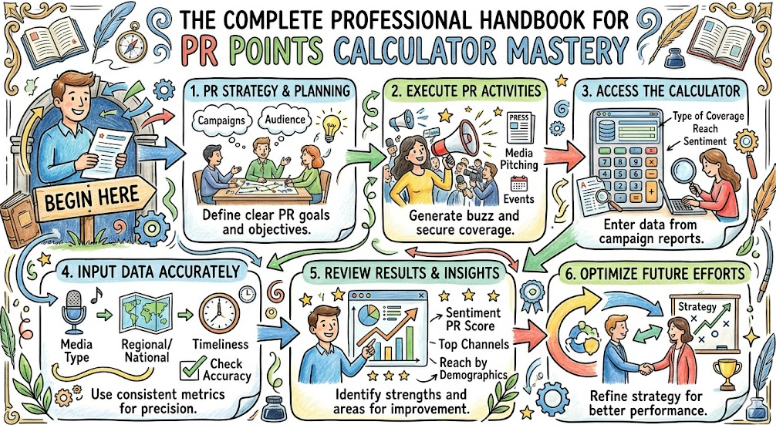
Step-by-Step Guide to Mastering PR Points Calculation
Systematic calculation of your PR points transforms a potentially overwhelming process into manageable, sequential steps. Begin by assembling every document that supports your claimed attributes because calculations based on memory invariably miss claimable items. Work through each category methodically, claiming only what you can verify through official documentation. Resist the temptation to estimate optimistically, as immigration officers will verify every claim against submitted evidence. Next, run your completed calculation through multiple independent calculator tools to identify discrepancies. If three calculators produce meaningfully different results, ambiguous program rules likely require professional interpretation.
After confirming your total, compare it against the most recent six invitation rounds. Your score must exceed the highest cutoff from those rounds, not merely match the lowest. Finally, identify the gap between your current score and competitive thresholds, then prioritize improvement strategies that generate the largest point gains within your available time and budget.
Gathering Necessary Documents
- Educational Document Inventory: Collect degree certificates, academic transcripts, and graduation letters for every post-secondary program. Missing transcripts force assessment delays while you request replacements from institutions that may take months to respond.
- Employment Evidence Compilation: Secure signed letters from every employer listing exact start and end dates, weekly hours, job duties matching occupation codes, and official company letterhead. Self-declared experience without employer verification receives zero credit.
Practicing Core Assessments
- Language Examination Simulation: Complete at least five full-length practice examinations under timed conditions before booking your official test. Simulated testing reveals specific skill weaknesses requiring focused remediation before expensive official attempts.
- Occupation Code Verification Exercise: Review the complete occupation classification manual rather than searching for your job title. Matching duties against official descriptions prevents claiming points under incorrect codes that would invalidate your entire work history.
Checking Market Demand Lists
- Occupation Ceiling Monitoring: High-demand occupations frequently reach annual limits within the first quarter of selection cycles. Checking current availability weekly prevents wasted effort on pathways already closed for the remaining selection rounds.
- Regional Priority List Comparison: National occupation shortages often differ dramatically from regional lists. An occupation oversubscribed nationally may face acute regional shortages, creating sponsorship opportunities unavailable in major cities.
Calculating the Final Result
- Multiple Tool Cross-Validation: Complete your calculation using three different online calculators with identical inputs. Score variations exceeding ten points indicate ambiguous program rules requiring professional clarification before application submission.
- Trend Analysis Application: Plot the last twelve invitation round cutoffs to identify seasonal patterns. Many systems experience predictable decreases in required points immediately following annual quota resets, allowing strategic application timing.
Strategies to Optimize Your PR Points Score
Optimizing your PR points score requires rejecting the passive assumption that your current profile represents your only option. Many candidates accept their language test scores as fixed, their education as complete, and their experience as sufficient. Yet motivated individuals regularly improve language scores by one or two full bands within six months of focused study. Others complete one-year graduate certificates that transform bachelor’s-only profiles into more valuable two-credential profiles. Some relocate to regional areas for six months to become eligible for nomination bonuses worth hundreds of points.
The optimization question reduces to identifying which improvements generate the greatest point gains per unit of time, money, and personal disruption. For a candidate five points below the cutoff, a single language test retake might solve the problem within weeks. For a candidate fifty points below, regional relocation for nomination may prove faster and cheaper than pursuing additional degrees. Strategic optimization requires honest assessment of which levers you can realistically pull.
The Performance Enhancement Strategy
- Targeted Language Sub-Skill Improvement: Rather than studying all four domains equally, identify your weakest skill through detailed score reports. Intensive tutoring focused specifically on that domain often generates faster gains than general language courses.
- Credential Combination Optimization: A bachelor’s degree alone generates moderate points, but adding a one-year graduate certificate in a related field often pushes you into the superior “two or more credentials” category, unlocking significant bonus points.
Bonus Qualification Advantages
- Family Connection Verification: Having a parent, sibling, or child already established as a permanent resident in your destination country typically adds bonus points. Documenting these relationships with birth certificates and immigration status proofs maximizes claimable value.
- Previous Canadian Experience Utilization: Any period of authorized work or study inside Canada, even short-term programs or temporary seasonal employment, generates adaptability points. Many candidates overlook brief experiences that still qualify for credit.
Regional Nomination Opportunities
- Strategic Community Selection: Research which regions actively recruit candidates with your specific occupation and language profile. Different regions maintain distinct priority lists, and targeting the right region doubles your nomination probability.
- Express Entry-Aligned Provincial Streams: Certain regional nomination programs operate parallel to federal Express Entry, providing the same substantial points bonus while requiring separate applications. These aligned streams offer faster processing than standalone regional pathways.
Common Mistakes in the PR Points Process
The gap between eligibility and selection claims thousands of applications through preventable errors rather than genuine disqualification. Understanding these common failure modes protects you from repeating them. Over-declaration of work experience leads the list, as candidates claim points for part-time employment calculated as full-time, or for periods of unemployment disguised as continuous employment. Educational misrepresentation follows closely, with candidates claiming points for incomplete degrees or for credentials that assessment bodies later downgrade.
Language test timing errors also generate significant rejection volumes, as candidates submit applications the day after their results expire, invalidating their entire language score. Format violations prove surprisingly frequent, with employment letters missing required elements like company letterhead, signatures, or detailed duty descriptions. Even simple administrative errors like inconsistent name spelling between passports, degrees, and language tests trigger extended verification delays or outright rejections. Each mistake shares a common cause: rushing the calculation process instead of methodically verifying every claim against documentary evidence.
Overestimating Attributes
- Experience Overlap Confusion: Candidates frequently claim points for work performed during full-time education, believing both activities count separately. Immigration systems generally reject overlapping periods unless the work was a formal co-op or internship component of the program.
- Unpaid Position Rejection: Volunteer roles, family business contributions without formal payroll records, and unpaid internships typically receive zero experience points regardless of skill level or duration. Only compensated, documented employment qualifies for credit.
Expired Documentation Risks
- Assessment Expiration Oversight: Educational credential assessments expire five years from issuance, not from application submission. Completing assessment early in your planning cycle risks expiration before you formally apply, requiring expensive reassessment.
- Police Certificate Timing Errors: Criminal record checks must issue within specific windows before application submission. Obtaining police certificates too early forces repetition, while obtaining them too late delays submission until certificates arrive.
Real-Life Case Scenarios Using PR Points Calculator
Analyzing real candidate profiles demonstrates how identical total points can arise from completely different attribute combinations, and how strategic adjustments produce dramatically different outcomes. The early career scenario features candidates under thirty with excellent language scores, graduate degrees, but limited work experience. Their youth generates maximum age points, partially offsetting shorter professional histories. The experienced professional scenario presents candidates over forty with extensive work histories, moderate language scores, and bachelor’s-level education.
Their age reduces points, but long experience partially compensates. The specialized hero scenario showcases candidates with unusual combinations: bilingual proficiency, multiple advanced credentials, or previous local study experience. These bonus-eligible candidates often exceed selection thresholds despite weaknesses in other categories. Comparing these scenarios against your profile reveals which optimization strategies would generate the greatest impact for your specific situation rather than generic advice.
The Early Career Scenario
- Profile Composition: Twenty-seven years old, master’s degree completed at twenty-four, two years of skilled experience, perfect first language scores, and no second language ability. Total points fall approximately thirty points below competitive thresholds.
- Optimization Pathway: Accumulating one additional year of experience moves the candidate into the next experience bracket, generating enough points for selection. Alternatively, securing a regional job offer provides immediate nomination without waiting for experience accumulation.
The Experienced Professional Scenario
- Profile Composition: Forty-four years old, bachelor’s degree, sixteen years of experience across three employers, intermediate language scores, and elementary second language ability. Age penalties significantly reduce the total points score below competitive levels.
- Optimization Pathway: Intensive language preparation focusing on reading and writing produces faster gains than speaking and listening. Raising first language scores by one full band generates sufficient points to overcome age penalties entirely.
The Specialized Hero Scenario
- Profile Composition: Thirty-two years old, two post-secondary diplomas (three years total study), six years of experience including one year of Canadian work through an intra-company transfer, and advanced scores in both official languages.
- Optimization Pathway: This profile already exceeds competitive thresholds substantially. The candidate should apply immediately through the Canadian Experience Class stream, which prioritizes local work experience and processes applications faster than federal skilled worker pathways.
Frequently Asked Questions (FAQs)
- Can I submit my application before receiving my educational credential assessment report?
No. Your application must include the completed assessment report at submission. Submitting without the report results in immediate rejection as incomplete. - How do I claim points for work experience with a dissolved employer?
Provide tax records, pay stubs, third-party letters from former colleagues, and any official documentation showing employment dates and duties. Affidavits from former managers may supplement missing employer letters. - Does self-employment count the same as traditional employment for points?
Self-employment qualifies only when you provide third-party verification including tax returns, client contracts, business licenses, and bank statements showing regular deposits. Self-declarations without external evidence receive no credit. - What happens if my spouse refuses to take a language test?
You receive zero points for spousal language ability. However, you can still apply as a single candidate by indicating that your spouse will not accompany you to the destination country. - Can I use the same language test results for multiple immigration applications?
Yes, provided the results remain valid for each submission. However, different countries accept different testing providers. Verify that your specific test appears on each destination’s approved provider list. - How do educational assessment bodies handle degrees from non-recognized institutions?
Degrees from institutions not recognized by the local accreditation authority typically receive equivalency downgrades or outright rejection. Points may reduce significantly or drop to zero for unrecognized credentials. - Will improving my language score after submitting my application increase my ranking?
No. Your ranking locks at application submission. Improved language scores cannot retroactively increase your points. You must withdraw and resubmit with new test results to benefit from higher scores. - Do I lose points for having a dependent child included in my application?
Generally no. Most points systems do not deduct points for dependent children. However, you must demonstrate sufficient settlement funds to support all family members included in your application. - How frequently should I recalculate my points during the application process?
Recalculate after every significant life event: new language test results, additional educational credentials, completed work experience years, or age milestone passages. Also recalculate after every invitation round to track changing cutoffs. - Can I claim points for work experience gained while holding temporary resident status?
Yes, provided the work was authorized and you maintained legal status throughout the employment period. Unauthorized work receives no credit regardless of skill level or duration. - What documentation proves common-law partnership for spousal points?
Joint bank accounts, shared lease agreements, utility bills in both names, insurance policies listing both parties, and affidavits from friends verifying at least twelve continuous months of cohabitation. - Does military service count toward adaptability bonus points in any system?
Some systems award nominal points for military service when combined with other adaptability factors. However, pure military experience without additional skilled work or education rarely generates significant points.
FINAL THOUGHT
Your PR points score is not a life sentence but a starting point for strategic action. Many candidates accept their first calculation as final, assuming they cannot change their age, education, or experience. Yet the most successful immigrants rarely submit their first calculated profile. They retake language tests until scores improve. They complete targeted credentials that unlock bonus categories. They relocate to regions offering nomination pathways. They include or exclude spouses strategically. Your score today reflects your current profile, but your score next year could look dramatically different with focused effort.
The calculator provides truth, but truth serves as the foundation for strategy, not the final verdict on your eligibility. Stop guessing whether you qualify. Stop assuming your profile cannot improve. Complete the calculation honestly, identify your specific gaps, then execute the single highest-leverage improvement available to you. Permanent residence rewards persistence, patience, and precision. Begin your journey with accurate calculation, continue with strategic optimization, and finish with successful settlement. The pathway exists. Walk it.
