
Introduction
Private jets are often seen as a symbol of luxury, but the real value of a private jet cabin is comfort. A well-designed jet cabin helps passengers relax, work, sleep, and travel with privacy. Whether someone is flying for business, family travel, or long-distance personal trips, cabin comfort plays a big role in the overall flying experience.
In this guide, we will explain the most important jet cabin comfort features in simple language. From soft seating and quiet cabins to lighting, Wi-Fi, dining space, and sleeping arrangements, each feature has a purpose. This blog from JETEXE.COM will help beginners understand how private jet interiors are designed for comfort, convenience, and a better travel experience.
What Are Jet Cabin Comfort Features?
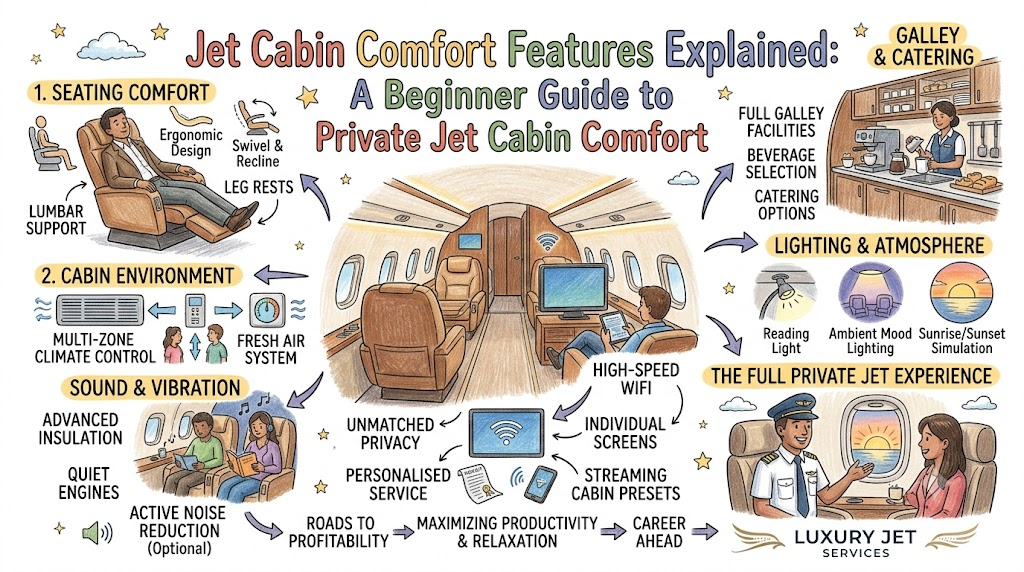
Jet cabin comfort features are the design elements and facilities inside an aircraft that make the journey more comfortable for passengers. These features may include spacious seating, adjustable lights, quiet cabin design, air conditioning, entertainment systems, internet connectivity, storage, and private lavatory facilities.
In private jets, cabin comfort is more personal than in commercial aircraft. Passengers can often enjoy more space, better privacy, flexible seating, and a calmer environment. The cabin is designed to feel less crowded and more relaxing.
Why Cabin Comfort Matters in Private Jets
Cabin comfort is important because flying can be tiring, especially on long journeys. A comfortable cabin reduces stress and helps passengers arrive fresh. For business travelers, it allows them to work, attend calls, review documents, or hold small meetings during the flight.
For families and VIP passengers, comfort means privacy, safety, flexible movement, and a peaceful travel environment. A good private jet cabin is not only about luxury materials; it is also about smart design that supports rest, productivity, and convenience.
Comfortable and Adjustable Seating
One of the most important private jet cabin features is seating. Private jet seats are usually wider, softer, and more adjustable than regular airline seats. Many seats can recline, rotate, or move slightly to create a better seating position.
In larger aircraft, some seats can convert into beds or lie-flat sleeping areas. This is useful for long flights where passengers need proper rest. Comfortable seating also helps reduce body fatigue, especially during multi-hour journeys.
Spacious Cabin Layout
Cabin layout decides how seats, tables, storage areas, and walking space are arranged inside the jet. A good layout makes the cabin feel open and easy to move around.
Light jets may have compact cabins with club-style seating, while larger jets may have separate zones for work, dining, and sleeping. The more spacious the layout, the easier it becomes for passengers to relax, stretch, and use the cabin comfortably.
Reclining Seats and Lie-Flat Options
Reclining seats are a major part of jet cabin comfort. They allow passengers to change their sitting position during the flight. This is useful for reading, resting, working, or sleeping.
In heavy jets and ultra-long-range jets, lie-flat seating or bed-style arrangements may be available. These features are especially helpful for overnight flights or international travel. Not every private jet has lie-flat seats, so passengers should check this before booking.
Noise Reduction and Quiet Cabin Design
A quiet cabin improves the travel experience. Private jet cabins are designed to reduce engine noise and outside sound as much as possible. Better insulation, cabin materials, and aircraft design help create a calmer environment.
A quiet cabin allows passengers to talk, work, sleep, or enjoy entertainment without disturbance. For business travelers, this is very useful during calls, meetings, or private discussions.
Cabin Lighting and Mood Control
Lighting has a strong effect on comfort. Modern jet cabins often include soft lighting, reading lights, and mood lighting. Some aircraft allow passengers to adjust lighting based on the time of day or activity.
Bright lighting is useful for working or reading, while softer lighting helps passengers relax or sleep. Good lighting also makes the cabin feel warmer and more premium.
Temperature and Climate Control
Cabin temperature control is another important comfort feature. Passengers should feel comfortable whether they are flying during summer, winter, day, or night.
Many private jets allow better control of cabin temperature compared to standard travel options. A stable and comfortable temperature helps reduce discomfort and makes the journey more pleasant.
Inflight Entertainment Systems
Entertainment systems can include screens, music systems, movies, Bluetooth audio, or device connectivity. These features help passengers enjoy the flight, especially on longer routes.
Families may use entertainment for children, while business travelers may use screens for presentations or work content. The quality of entertainment systems depends on the aircraft model and cabin setup.
Wi-Fi and Business Connectivity
Wi-Fi has become one of the most requested private jet cabin comfort features. Business travelers often need internet access for emails, video calls, messages, and online work.
Some private jets offer strong connectivity, while others may have limited internet depending on the route, aircraft size, and service provider. Before booking, passengers should confirm whether Wi-Fi is available and suitable for their needs.
Private Work and Meeting Space
Private jets are popular among business travelers because the cabin can become a flying office. Many jets include fold-out tables, power outlets, comfortable seating groups, and quiet spaces for discussion.
Some cabin layouts allow face-to-face seating, which is useful for small meetings. This helps executives save time and remain productive during travel.
Sleeping and Resting Arrangements
For long-distance flights, sleeping comfort becomes very important. Larger jets may include lie-flat seats, divans, or separate rest areas. Some ultra-long-range jets may also offer more advanced sleeping arrangements.
Rest-friendly features include soft lighting, quiet cabins, comfortable seats, blankets, pillows, and stable cabin temperature. These small details can make a big difference on long flights.
Premium Materials and Interior Finishes
Private jet interiors often use premium materials such as leather seating, soft carpets, polished wood finishes, and high-quality cabin panels. These materials improve both comfort and appearance.
However, premium interiors are not only about looks. Good materials also affect seat comfort, cabin feel, sound control, and long-term durability. A well-finished cabin creates a calm and professional environment.
Refreshment and Dining Facilities
Many private jets include refreshment centers, small galley areas, or dining tables. Depending on aircraft size, passengers may have access to snacks, drinks, hot meals, or customized catering.
Dining comfort depends on cabin space and table design. In larger jets, passengers can enjoy proper meal service with more privacy and comfort.
Storage Space and Baggage Convenience
Storage is often ignored, but it is an important comfort feature. Private jets usually offer convenient baggage access, cabin storage, and space for personal items.
Passengers should check baggage capacity before travel, especially when carrying business equipment, sports gear, family luggage, or luxury items. A comfortable cabin should not feel crowded because of bags.
Lavatory and Hygiene Features
Most midsize and larger private jets include lavatory facilities. Some light jets may have very limited lavatory options, while larger jets offer more private and comfortable lavatory spaces.
For long flights, lavatory quality becomes more important. Clean design, privacy, lighting, and space all contribute to passenger comfort.
Personalized Cabin Service
Personalized service is another reason private aviation feels comfortable. Passengers may choose food, drinks, seating preferences, temperature settings, or cabin arrangements depending on the aircraft and service provider.
This personal approach makes the travel experience smoother and more flexible compared to regular airline travel.
Jet Cabin Comfort by Aircraft Size
Different jets offer different comfort levels. Cabin size has a direct effect on space, seating, storage, and available features.
Light Jets
Light jets are suitable for short trips and small groups. They offer comfortable seating but limited walking space and fewer luxury features. Some may have basic lavatory options.
Midsize Jets
Midsize jets offer more cabin space, better seating, improved luggage capacity, and more comfortable layouts. They are useful for regional business trips and medium-distance travel.
Super Midsize Jets
Super midsize jets provide more legroom, better range, improved cabin height, and stronger business travel features. They often include better Wi-Fi, entertainment, and dining space.
Heavy Jets
Heavy jets are designed for longer trips and larger groups. They usually offer more seating zones, better sleeping options, larger lavatories, and premium cabin features.
Ultra-Long-Range Jets
Ultra-long-range jets provide the highest level of cabin comfort. They may include separate work, dining, lounge, and sleeping areas. These aircraft are ideal for international and overnight travel.
Business Comfort Features in Private Jets
Private jets are highly useful for business travelers. Important business comfort features include:
- Quiet cabin for meetings
- Wi-Fi for emails and calls
- Power outlets for laptops and devices
- Fold-out tables for work
- Club seating for discussion
- Privacy for confidential conversations
- Flexible travel schedule
These features help passengers use travel time productively instead of losing work hours.
Luxury Comfort Features in Modern Jet Cabins
Modern luxury jet cabins may include designer interiors, soft leather seats, advanced lighting, premium sound systems, custom carpets, large screens, and high-end dining facilities.
Luxury comfort is not only about expensive materials. It is about creating a smooth, peaceful, and personalized flying experience where every detail supports passenger comfort.
Family and Passenger-Friendly Comfort Features
Private jet cabins can also be helpful for families. Flexible seating, privacy, quiet space, snacks, and easier movement make travel more comfortable for children and elderly passengers.
Families can sit together, move more freely, and avoid crowded airport-style travel stress. This makes private jet cabins useful for both business and personal journeys.
How Cabin Comfort Improves Long Flights
Long flights can cause tiredness, body stiffness, and mental fatigue. Good cabin comfort helps reduce these problems.
Comfortable seating, better lighting, quiet design, climate control, hydration, and sleeping space all help passengers feel better during and after the flight. A well-designed cabin allows the body and mind to rest properly.
Things to Check Before Booking a Private Jet
Before booking a private jet, passengers should check:
- Cabin size and height
- Seat type and seating layout
- Legroom and walking space
- Wi-Fi availability
- Entertainment options
- Lavatory facilities
- Sleeping arrangements
- Catering options
- Baggage capacity
- Noise comfort and cabin privacy
These details help passengers choose the right aircraft for their travel needs.
Common Mistakes People Make When Judging Jet Cabin Comfort
Many people judge cabin comfort only by looking at photos. This can be misleading. A cabin may look beautiful but still have limited space, low cabin height, or fewer practical features.
Common mistakes include ignoring luggage space, not checking Wi-Fi quality, assuming every jet has lie-flat seats, and not asking about lavatory facilities. Comfort should always be judged by both design and practical use.
Future of Jet Cabin Comfort
Jet cabin comfort is improving with new technology and smarter design. Future cabins may include better soundproofing, advanced mood lighting, improved seating, sustainable materials, faster connectivity, and more personalized layouts.
Aircraft manufacturers and interior designers are focusing on cabins that support wellness, productivity, privacy, and luxury at the same time.
FAQs
1. What are jet cabin comfort features?
Jet cabin comfort features are the facilities and design elements inside a jet that make travel more relaxing. These include seating, lighting, Wi-Fi, noise control, temperature control, entertainment, and cabin layout.
2. Why are private jet cabins more comfortable?
Private jet cabins are more comfortable because they offer more privacy, flexible seating, less crowding, and personalized service. Many cabins are designed for both relaxation and business use.
3. Do all private jets have lie-flat seats?
No, all private jets do not have lie-flat seats. Smaller jets may only have reclining seats, while larger jets may offer lie-flat or bed-style seating.
4. Is Wi-Fi available in private jets?
Many modern private jets offer Wi-Fi, but availability depends on the aircraft, route, and service provider. Passengers should confirm Wi-Fi before booking.
5. Which private jets have the most comfortable cabins?
Heavy jets and ultra-long-range jets usually have the most comfortable cabins because they offer more space, better seating, sleeping areas, larger lavatories, and premium features.
6. How important is cabin size in private jet comfort?
Cabin size is very important. A larger cabin usually offers more legroom, better movement, more storage, and improved seating comfort.
7. Can private jet cabins be customized?
Yes, many private jet cabins can be customized by owners. Customization may include seating layout, materials, lighting, entertainment, storage, and interior design.
8. Do private jets have entertainment systems?
Many private jets have entertainment systems such as screens, music systems, device connectivity, and media options. The features depend on the aircraft model and cabin setup.
9. Are private jets comfortable for long flights?
Yes, larger private jets are usually very comfortable for long flights. They may include lie-flat seats, sleeping areas, quiet cabins, dining space, and advanced climate control.
10. What should I check before booking a private jet?
You should check cabin size, seating layout, Wi-Fi, lavatory, baggage space, sleeping options, entertainment, catering, and overall cabin comfort before booking.
Conclusion
Jet cabin comfort features are an important part of the private aviation experience. They include seating, layout, lighting, quiet cabin design, Wi-Fi, entertainment, dining, storage, lavatory facilities, and personalized service.
The best cabin is not always the most expensive one. It is the one that matches the passenger’s travel purpose, flight length, group size, and comfort needs. Through simple aviation guides like this, JETEXE.COM helps readers understand private jet travel and cabin design in a clear and practical way.
