
Introduction
The cockpit is the command center of every jet aircraft. It is the place where pilots monitor aircraft performance, control flight operations, communicate with air traffic services, and make important decisions throughout the journey.
For aviation beginners, the cockpit can appear complex because it contains many displays, controls, switches, and systems. However, every component has a specific purpose designed to help pilots operate the aircraft safely and efficiently.
Understanding a jet cockpit is an important foundation for aviation students because it connects theoretical knowledge with real-world aircraft operations. Before learning advanced flying techniques, students need to understand how pilots interact with aircraft systems, interpret information, and manage different phases of flight.
Modern jet cockpits combine advanced technology, automation, and human decision-making. While computers assist pilots with many tasks, pilots remain responsible for monitoring systems, making decisions, and ensuring safe flight operations.
This guide explains the basic structure of a jet cockpit, important controls, instruments, displays, systems, and procedures to help beginners develop a strong understanding of professional aviation environments.
Real-world examples
- An aviation student studying cockpit layouts learns how different instruments provide information about aircraft speed, altitude, and direction.
- A beginner pilot using a flight simulator practices identifying displays and controls before operating an actual aircraft.
- A trainee observes how professional pilots monitor engine performance, navigation information, and aircraft systems during different flight phases.
Evaluation Criteria for Understanding a Jet Cockpit
Aviation beginners should focus on several important areas when learning cockpit systems.
Understanding Instrument Functions
Students should learn the purpose of each cockpit instrument instead of only memorizing names. Understanding how information helps pilots make decisions is more important.
Learning Aircraft Systems
A cockpit is connected to many aircraft systems, including:
- Flight controls
- Navigation systems
- Communication systems
- Engine monitoring systems
- Electrical systems
Understanding how these systems work together improves overall aviation knowledge.
Connecting Theory With Practice
Aviation concepts become easier when students connect classroom learning with cockpit operations.
For example:
- Aerodynamics explains aircraft movement.
- Instruments show aircraft performance.
- Controls allow pilots to manage flight conditions.
Developing Situational Awareness
Pilots must continuously understand:
- Aircraft position
- Weather conditions
- System status
- Flight progress
Cockpit knowledge helps develop this awareness.
Understanding Safety Procedures
Safety is a major part of aviation. Students should learn why pilots follow checklists, procedures, and standard operating practices.
What Is a Jet Cockpit?
A jet cockpit is the area where pilots operate and monitor a jet aircraft.
It contains:
- Flight controls
- Aircraft displays
- Communication equipment
- Navigation systems
- Engine monitoring systems
- Safety controls
The cockpit provides pilots with essential information needed to operate the aircraft from takeoff to landing.
Unlike the passenger cabin, which is designed for comfort, the cockpit is designed for control, monitoring, and decision-making.
Modern jet cockpits are often called glass cockpits because they use digital displays instead of many traditional mechanical instruments.
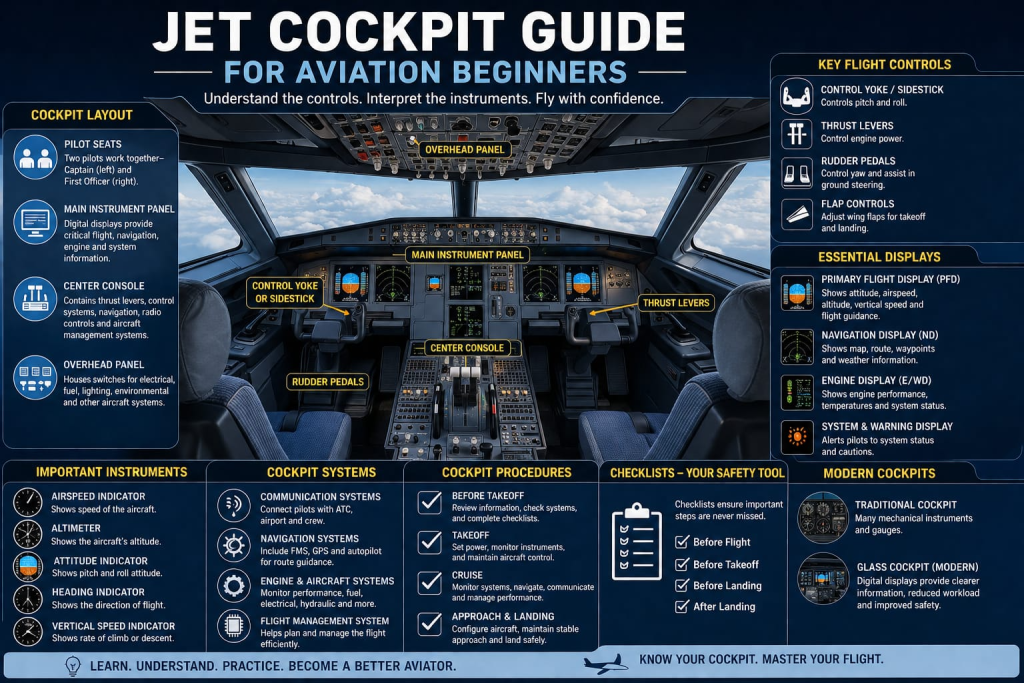
Basic Layout of a Jet Cockpit
Although cockpit designs vary between aircraft models, most jet cockpits contain similar functional areas.
Pilot Seats
A typical commercial jet cockpit has two primary pilot positions:
Captain Position
The captain is the pilot responsible for overall flight operation and decision-making.
Responsibilities include:
- Managing flight safety
- Coordinating with the crew
- Making operational decisions
First Officer Position
The first officer supports the captain and shares flight responsibilities.
Responsibilities include:
- Monitoring aircraft systems
- Performing flight duties
- Assisting with navigation and communication
Both pilots work together using standard procedures and teamwork.
Main Instrument Panel
The main instrument panel is located in front of the pilots.
It contains important displays such as:
- Primary flight display
- Navigation display
- Engine information displays
- Warning systems
These screens provide pilots with information required for flight management.
Center Console
The center console is located between the pilot seats.
It commonly includes:
- Thrust controls
- Communication controls
- Navigation controls
- Aircraft management systems
This area allows pilots to manage several aircraft functions during flight.
Overhead Panel
The overhead panel contains switches and controls related to aircraft systems.
Examples include:
- Electrical systems
- Fuel systems
- Lighting controls
- Environmental systems
Pilots use this area mainly during aircraft preparation and system management.
Primary Cockpit Controls Explained
Control Yoke or Sidestick
The control system allows pilots to control aircraft movement.
Depending on aircraft design, pilots may use:
- A traditional yoke
- A sidestick controller
These controls influence:
- Pitch movement
- Roll movement
They help pilots control the aircraft’s direction and attitude.
Throttle or Thrust Levers
Thrust levers control engine power.
Pilots use them during:
- Takeoff
- Climb
- Cruise
- Descent
Managing engine power is essential for maintaining aircraft performance.
Rudder Pedals
Rudder pedals control the aircraft’s yaw movement.
They are used for:
- Directional control
- Ground movement
- Coordinated flight
Pilots use pedals together with other controls to maintain balanced aircraft movement.
Flap Controls
Flaps are movable wing surfaces used to change aircraft performance.
Pilots use flaps mainly during:
- Takeoff
- Approach
- Landing
They help improve lift characteristics at lower speeds.
Understanding Jet Cockpit Displays
Modern aircraft rely heavily on digital displays.
Primary Flight Display
The Primary Flight Display provides important flight information.
It commonly shows:
- Airspeed
- Altitude
- Aircraft attitude
- Vertical speed
- Flight guidance information
Pilots continuously monitor this display during flight.
Navigation Display
The Navigation Display provides information about aircraft position and route.
It may show:
- Flight path
- Navigation information
- Waypoints
- Weather information
This helps pilots understand where the aircraft is and where it is going.
Engine Display Systems
Engine displays provide information about aircraft engine performance.
They help pilots monitor:
- Engine operation
- Temperature information
- Performance indicators
- System warnings
Monitoring engine data helps pilots identify potential issues early.
Essential Instruments in a Jet Cockpit
Airspeed Indicator
The airspeed indicator shows aircraft speed through the air.
It helps pilots:
- Maintain safe flight speeds
- Manage takeoff and landing speeds
- Avoid unsafe conditions
Altimeter
The altimeter shows aircraft altitude.
Altitude awareness is important for:
- Flight separation
- Navigation
- Safe operations
Attitude Indicator
The attitude indicator shows aircraft orientation.
It helps pilots understand:
- Aircraft pitch
- Aircraft roll
- Flight position
Heading Indicator
The heading indicator provides aircraft direction information.
It helps pilots maintain the correct flight path.
Vertical Speed Indicator
This instrument shows whether the aircraft is:
- Climbing
- Descending
- Maintaining altitude
Cockpit Communication Systems
Communication is a critical part of aviation operations.
Radio Communication
Pilots use radio systems to communicate with:
- Air traffic controllers
- Airport operations
- Other aviation teams
Clear communication helps maintain safe aircraft movement.
Intercom Systems
Intercom systems allow communication between:
- Pilots
- Cabin crew
This supports coordination during flight operations.
Data Communication Systems
Modern aircraft may use digital communication systems to exchange operational information.
These systems support efficient communication between aircraft and ground teams.
Navigation Systems in Jet Cockpits
Flight Management System
The Flight Management System is an important computer system used for flight planning and management.
It helps pilots with:
- Route information
- Performance calculations
- Navigation assistance
GPS Navigation
GPS-based navigation helps pilots determine aircraft position accurately.
It supports:
- Route tracking
- Position awareness
- Navigation planning
Autopilot System
Autopilot assists pilots by controlling certain aircraft functions.
It can help maintain:
- Altitude
- Direction
- Flight path
However, pilots remain responsible for monitoring the aircraft and making decisions.
Engine and Aircraft System Monitoring
Pilots continuously monitor aircraft systems during flight.
Engine Parameters
Engine monitoring helps pilots understand aircraft performance.
Important information includes:
- Engine operation status
- Performance indicators
- Warning messages
Fuel Management
Fuel systems help pilots monitor:
- Fuel quantity
- Fuel usage
- Fuel distribution
Proper fuel management is essential for safe flight planning.
Electrical Systems
Aircraft electrical systems provide power to important aircraft components.
Pilots monitor these systems to ensure reliable operation.
Hydraulic Systems
Hydraulic systems support important aircraft functions, including certain flight controls and landing operations.
Cockpit Procedures During Different Flight Phases
Before Takeoff
Before departure, pilots complete several preparation steps.
These may include:
- Reviewing flight information
- Checking aircraft systems
- Completing checklists
Takeoff
During takeoff, pilots focus on:
- Engine power
- Aircraft speed
- Flight instruments
- Aircraft response
Takeoff requires strong teamwork and accurate monitoring.
Cruise
During cruise flight, pilots monitor:
- Navigation progress
- Aircraft systems
- Weather conditions
- Communication
Automation may assist, but pilots continue supervising operations.
Approach and Landing
Landing requires careful preparation.
Pilots monitor:
- Aircraft configuration
- Speed
- Altitude
- Flight path
The cockpit becomes highly focused during this phase.
Role of Checklists in Jet Cockpits
Checklists are an essential part of aviation safety.
They help pilots:
- Complete important tasks consistently
- Avoid missing critical steps
- Maintain standard procedures
Common checklist stages include:
- Before flight
- Before takeoff
- Before landing
- After landing
Checklists support pilot decision-making and teamwork.
How Technology Has Changed Jet Cockpits
Traditional Cockpits
Older aircraft used many separate mechanical instruments.
Pilots had to interpret information from multiple gauges.
Modern Glass Cockpits
Modern aircraft use digital displays that combine information into organized screens.
Benefits include:
- Better information management
- Improved monitoring
- Reduced workload
Future Cockpit Concepts
Future aircraft may include more advanced automation and decision-support technologies while maintaining the importance of pilot supervision.
Common Mistakes Aviation Beginners Make
Trying to Memorize Everything Immediately
Cockpit systems contain many components. Students should learn gradually.
Ignoring System Relationships
Aircraft systems work together. Understanding connections between systems improves learning.
Focusing Only on Controls
A cockpit is not only about controlling the aircraft. Monitoring and decision-making are equally important.
Not Practicing Situational Awareness
Pilots must understand the complete flight environment, not only individual instruments.
Learning Tips for Aviation Students
- Study cockpit diagrams regularly.
- Learn one system at a time.
- Practice identifying instruments.
- Use flight simulation tools when available.
- Connect theory with practical training.
- Understand the purpose behind each control.
Jet Cockpit Components Comparison Table
| Cockpit Component | Main Function | Importance |
|---|---|---|
| Primary Flight Display | Shows flight information | Helps pilots monitor aircraft status |
| Navigation Display | Provides route information | Supports navigation decisions |
| Flight Controls | Controls aircraft movement | Allows aircraft operation |
| Engine Displays | Monitor aircraft performance | Supports safety monitoring |
| Communication Systems | Connect pilots with others | Enables coordination |
Frequently Asked Questions
1. What is a jet cockpit?
A jet cockpit is the control area where pilots operate aircraft systems, monitor flight conditions, and manage flight operations.
2. Why is cockpit knowledge important for aviation beginners?
Cockpit knowledge helps students understand aircraft operations, instruments, controls, and professional flying procedures.
3. What are the main parts of a jet cockpit?
Major parts include pilot seats, instrument panels, center console, overhead panel, displays, and flight controls.
4. What information does the Primary Flight Display show?
It commonly shows information such as airspeed, altitude, aircraft attitude, and flight guidance details.
5. What is the purpose of the Flight Management System?
It helps pilots manage flight planning, navigation information, and aircraft performance calculations.
6. How do pilots control a jet aircraft?
Pilots use controls such as sidesticks, yokes, thrust levers, and pedals to manage aircraft movement and performance.
7. Why do pilots use cockpit checklists?
Checklists help pilots complete important procedures consistently and improve flight safety.
8. What is the difference between traditional and modern cockpits?
Traditional cockpits used many mechanical instruments, while modern cockpits use integrated digital displays.
9. Do all jet cockpits have the same layout?
No. Cockpit layouts vary depending on aircraft design, manufacturer, and operational requirements.
10. How can aviation students learn cockpit systems effectively?
Students can learn through theory study, cockpit diagrams, simulator practice, and connecting concepts with flight training.
Conclusion
The jet cockpit is the center of aircraft operations where technology, human skills, and decision-making come together. For aviation beginners, understanding cockpit systems creates a strong foundation for future pilot training.
Learning cockpit layouts, controls, instruments, and procedures helps students better understand how professional pilots operate modern aircraft. With consistent study and practical learning, beginners can gradually develop the knowledge needed to progress in aviation.
