
Introduction
Creating a personal blog is one of the simplest ways to give your ideas, experiences, and knowledge a permanent online home. Instead of allowing valuable thoughts to disappear in fast-moving social media feeds, a blog helps you organise your writing in a space connected to your identity.
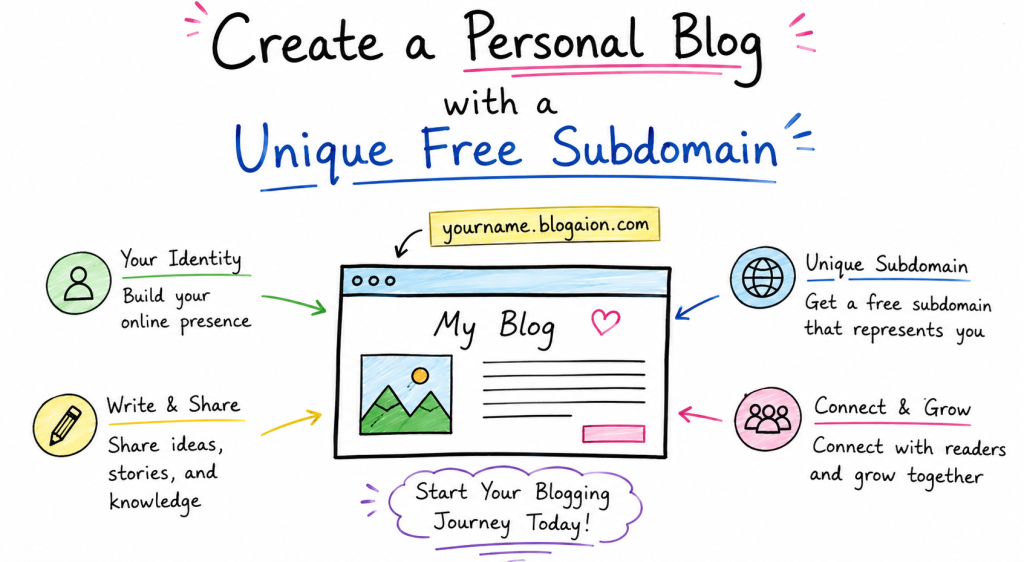
However, many beginners hesitate because they believe starting a blog requires purchasing hosting, registering a domain, learning coding, or managing complicated technical settings. A free blog with a personal subdomain removes many of these early barriers. It allows you to create a recognisable blog address and begin publishing without handling website development.
Your subdomain can represent your name, writing theme, professional subject, creative project, or community. It becomes part of your online identity and gives readers a consistent place to find your work.
This guide explains the value of a personal blog, the purpose of a unique subdomain, practical naming ideas, content-planning methods, and simple publishing habits for building a meaningful writing presence.
A Personal Blog Gives Your Ideas a Permanent Home
Social media is useful for sharing brief updates, but it is not always suitable for detailed articles, tutorials, research, poetry, personal reflections, or long-form stories. Posts can quickly move down a feed, making older content difficult for readers to discover.
A personal blog provides a more organised structure. Your writing can remain connected to one identity and can be arranged around topics that matter to you.
You might use your blog to publish:
- Personal stories and life experiences
- Professional knowledge and industry insights
- Educational guides and tutorials
- Poetry, fiction, and creative writing
- Research notes and thoughtful opinions
- Study materials and learning reflections
- Project updates and case studies
- Reviews, observations, and cultural commentary
You do not need to be a professional author to begin. A personal blog can grow gradually as your confidence, knowledge, and writing skills develop.
The Role of a Unique Subdomain
A subdomain is the personalised part of your blog address that appears before the main platform name. It gives your blog a recognisable location within a larger publishing platform.
For example, a writer may choose a subdomain based on:
- Their full name
- A professional identity
- A writing subject
- A creative pen name
- A project or publication name
- A specific community interest
A unique subdomain makes your blog easier to identify. Instead of publishing every article under a general account page, you create a distinct writing space connected to your chosen name.
This is particularly useful for beginners who want to build an online presence without purchasing an independent domain immediately. A free blog with a subdomain allows you to focus first on writing, publishing, and developing your identity.
Benefits of a Free Blog with a Personal Subdomain
A personal subdomain offers practical advantages for writers, students, professionals, and creators.
A recognisable digital identity
Your chosen subdomain becomes part of how readers identify your work. When the name remains consistent, people can more easily connect different articles with the same writer or publication.
This can be valuable for someone building a professional portfolio, publishing creative work, or developing expertise around a specific subject.
No coding requirement
Beginners often assume that creating a blog requires knowledge of HTML, web design, databases, or server management. A beginner-friendly blogging platform handles the technical foundation, allowing writers to concentrate on content.
This makes it possible to create a blog without coding or previous website-building experience.
Lower starting barriers
Purchasing a domain and hosting package can feel unnecessary when you are still testing your interest in blogging. A free personal blogging website allows you to begin without making an early financial commitment.
You can learn how to plan articles, format content, publish consistently, and understand your preferred writing style before considering additional options.
Better organisation than social feeds
A blog gives your articles a more structured home. Readers can spend time with complete pieces instead of seeing only short updates mixed with unrelated content.
This structure is useful for long-form writing, professional articles, tutorials, educational content, personal essays, and story collections.
A growing writing portfolio
Every useful article adds to your body of work. Over time, your blog can show your interests, knowledge, communication skills, creative development, and publishing consistency.
Students may use a blog to organise learning projects. Freelancers may publish practical insights. Professionals may explain industry concepts, while creative writers may develop collections of poems or stories.
Selecting a Memorable Subdomain Name
Your subdomain is an important part of your blog identity, so the name should be chosen carefully. It does not need to be clever or complicated. In most cases, a clear and memorable name works better than a confusing one.
Use your name for personal branding
Your real name can be suitable when the blog represents your professional work, opinions, projects, or personal experiences.
A name-based identity gives you flexibility because it does not restrict you to one subject. You can publish across several related topics while keeping the blog connected to you as the author.
Choose a topic-focused name
A subject-based name may be useful when your blog has a clear theme. For example, you might create a blog about software learning, classroom teaching, personal finance education, travel experiences, storytelling, productivity, or book discussions.
The name should give readers a reasonable idea of the content they can expect.
Consider a creative pen name
Poets, fiction writers, and storytellers sometimes prefer a pen name. This can create a memorable creative identity while keeping the blog separate from professional or personal accounts.
The pen name should still be easy to spell, pronounce, and remember.
Keep the name simple
Avoid using too many numbers, symbols, repeated letters, or difficult abbreviations. A simple name is easier to type, share, and recall.
Before selecting it, read the name aloud. Check whether it sounds natural and whether someone could spell it after hearing it once.
Allow room for future growth
A very narrow subdomain may become limiting if your interests expand. For example, a name focused on one small project may not suit you after the project ends.
Select a name that matches your current purpose but still gives you room to develop new content categories.
Planning the Purpose of Your Personal Blog
A clear purpose helps you decide what to publish and which readers you want to support. Your purpose does not need to be permanent, but it should provide a useful starting direction.
Complete this simple sentence:
“My blog helps readers by sharing __________.”
Your answer might include:
- Beginner-friendly technology lessons
- Honest experiences about independent writing
- Practical study advice for students
- Professional knowledge from a specific industry
- Original poems and short stories
- Research summaries in simple language
- Personal reflections about creativity and growth
- Educational resources for teachers or parents
Once you understand your main purpose, selecting topics becomes easier. It also prevents the blog from becoming a collection of unrelated posts without a clear identity.
Building Clear Content Categories
Content categories help organise your articles. They also give readers an idea of the main subjects covered by your blog.
A new blogger usually does not need many categories. Starting with three or four focused areas is often enough.
A creative-writing blog might include:
- Short Stories
- Poetry
- Writing Reflections
- Character Ideas
A professional blog might include:
- Industry Insights
- Practical Guides
- Career Lessons
- Project Experiences
A student blog might include:
- Study Notes
- Learning Projects
- Book Reflections
- Skill Development
Avoid creating a separate category for every article. Categories should represent broad subjects that can contain several related posts.
Preparing Your First Articles
A personal blog feels more complete when it begins with a small group of useful articles. You do not need to publish everything at once, but preparing a few ideas in advance can reduce pressure.
Consider starting with these article types:
A welcome article
Introduce the purpose of your blog, the subjects you plan to explore, and the type of reader who may find your work useful.
Keep the article focused on the blog rather than sharing every detail about yourself.
A practical guide
Write an article that solves a clear problem. A useful guide can help readers while demonstrating your knowledge and communication style.
Choose a subject you understand well enough to explain in simple steps.
A personal experience
Share a meaningful lesson from your education, work, creative process, or personal development. Focus on the lesson readers can take from the experience.
A resource article
Organise useful tips, ideas, methods, or recommendations around one topic. Explain why each point matters rather than creating a list without context.
A thoughtful opinion
Present your perspective on an issue connected to your blog’s theme. Support your position with clear reasoning and avoid presenting personal opinions as confirmed facts.
Creating a Sustainable Publishing Routine
Many beginners create a blog with enthusiasm but stop publishing because their schedule is unrealistic. Consistency does not mean publishing every day. It means choosing a routine you can maintain.
One useful article every two weeks can be more valuable than several rushed articles followed by months of silence.
A simple routine could include:
- Collecting topic ideas during the week
- Selecting one focused subject
- Creating a brief outline
- Writing the first draft
- Taking a short break before editing
- Proofreading for clarity and accuracy
- Publishing and sharing the article responsibly
Keep an idea list so you do not have to find a completely new subject every time you want to write. Questions from readers, work experiences, books, conversations, and personal observations can all inspire useful articles.
Writing for Real Readers
Search visibility may be important, but your first responsibility is to help the reader. Articles written only to repeat keywords often feel unnatural and provide little value.
A reader-focused article should have:
- A clear and accurate title
- An opening that explains the article’s value
- Short and readable paragraphs
- Informative subheadings
- Practical examples
- Smooth transitions
- Accurate information
- A meaningful conclusion
Use simple language when a simple word can communicate the idea clearly. Explain unfamiliar terms and avoid making the reader feel inexperienced for not knowing something.
Your writing should sound natural, thoughtful, and useful.
Developing a Recognisable Writing Voice
Your writing voice is the personality readers notice across your articles. It develops gradually through practice.
Some writers sound conversational and encouraging. Others are analytical, reflective, direct, or story-focused. You do not need to imitate another writer’s style to sound professional.
A recognisable voice can develop when you:
- Write about subjects you genuinely understand
- Use language that feels natural to you
- Explain ideas with your own examples
- Maintain a consistent level of formality
- Avoid copying popular expressions
- Edit unnecessary words
- Read your article aloud before publishing
Authenticity does not mean publishing every thought without editing. Strong personal writing combines an individual perspective with careful structure and respect for the reader.
Starting a Personal Blog on BlogAion
BlogAion provides a free blogging platform for writers who want a simple space for publishing articles, stories, poetry, tutorials, opinions, research, and other meaningful content.
Writers can create individual blogs, claim personal BlogAion subdomains, and begin publishing without coding knowledge. This allows beginners to develop a distinct blog identity without managing technical website infrastructure.
The platform also supports clean and distraction-free presentation, responsive reading across different devices, and light and dark reading modes. Published work remains organised within an individual blog rather than depending entirely on temporary social media updates.
Writers interested in collaboration can also develop blogs with multiple contributors. This can support educational publications, community projects, research groups, creative collections, and shared subject-based blogs.
Common Mistakes That Weaken a New Blog
A personal blog can develop slowly, but certain mistakes can make the process more difficult.
Choosing an unclear subdomain
A complicated or unrelated name can confuse readers. Select a name that connects naturally with you, your subject, or your publication.
Starting too many categories
Publishing across many unrelated subjects can make your blog feel unfocused. Begin with a few connected categories and expand only when necessary.
Copying another writer’s identity
Learning from experienced writers is helpful, but copying their tone, ideas, or structure prevents you from developing your own voice. Use your experiences and explanations.
Publishing without proofreading
Spelling errors, broken sentences, and inaccurate details can reduce reader trust. Review each article carefully before publishing.
Expecting immediate attention
Building a useful body of work takes time. Early articles may receive limited attention, but they still help you practise and develop your portfolio.
Depending entirely on promotion
Sharing your articles can help readers find them, but promotion cannot replace useful content. Focus first on writing something worth reading and sharing.
Abandoning the blog after a short break
Missing a planned publishing date does not mean your blog has failed. Adjust your schedule and continue. A realistic routine is more valuable than an unrealistic promise of constant publishing.
Long-Term Value of an Organised Personal Blog
A blog becomes more valuable as your published work grows. Each article can represent a lesson, idea, skill, experience, or creative achievement.
Over time, your blog may help you:
- Track the development of your thinking
- Build a professional or creative portfolio
- Explain your knowledge to others
- Improve your writing discipline
- Connect related ideas in one organised place
- Share work with readers beyond your immediate network
- Create a lasting collection of original content
The greatest value often comes from the process itself. Regular writing encourages deeper thinking, clearer communication, careful research, and stronger creative confidence.
Frequently Asked Questions
Can I create a personal blog without coding skills?
Yes. Beginner-friendly blogging platforms can provide the technical structure needed to create and publish a blog. This allows you to focus on choosing a blog identity, planning topics, writing articles, and improving your content without learning programming or website development first.
Is a free subdomain suitable for a beginner?
A free subdomain is a practical starting option for beginners who want to publish without paying for an independent domain and hosting. It gives the blog a recognisable address while allowing the writer to learn about content planning, article formatting, editing, and consistent publishing.
Can I use my own name as the subdomain?
Using your name can be helpful when you want to build a personal, professional, or creative identity. It also gives you flexibility to cover several connected topics. Choose a simple version of your name that is easy to spell and remember.
Which topics can be published on a personal blog?
A personal blog can include professional articles, personal experiences, tutorials, poetry, fiction, research, opinions, educational content, project updates, and creative stories. The most suitable topics depend on your knowledge, interests, purpose, and intended readers.
How often should a beginner publish blog articles?
Choose a schedule that fits your available time and writing process. Publishing one useful article every week, every two weeks, or even once a month can work well. Consistency and quality are more important than publishing frequently and becoming exhausted.
Does BlogAion provide personal subdomains?
BlogAion allows writers to create personal blogs and claim BlogAion subdomains. Writers can use these spaces to organise and publish different forms of content without coding. The platform is suitable for beginners, independent writers, professionals, students, storytellers, and collaborative publishing groups.
Conclusion
Creating a personal blog with a unique free subdomain gives your writing a clear identity and an organised online home. It reduces the technical and financial barriers that often prevent beginners from starting, allowing you to concentrate on meaningful ideas, useful articles, and creative expression.
A strong blog begins with a simple name, a focused purpose, a few clear content categories, and a realistic publishing routine. You do not need to publish constantly or understand advanced technology. You need a willingness to learn, edit carefully, and continue building your collection of work.
