
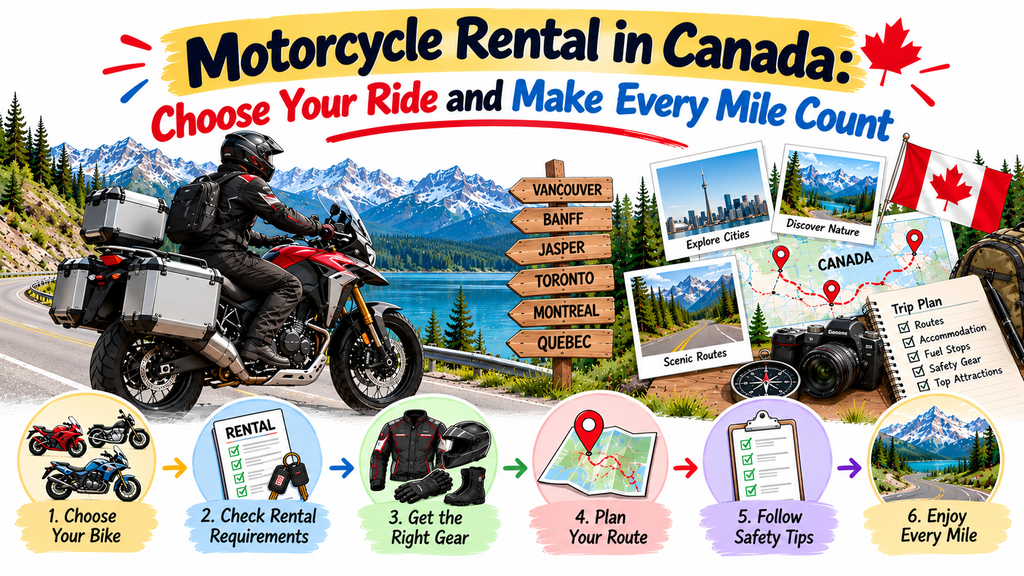
Introduction
Canada is a wonderful place to explore by motorcycle. You can ride past sparkling lakes, green forests, quiet villages, and tall mountains. You can also discover coastal towns and enjoy open roads away from busy city streets.
A great motorcycle trip starts with the right choices. You need a bike that suits your skills, a route that fits your time, and a budget that covers your needs. You should also prepare for changing weather and understand the rental rules.
If you want to explore rental options, visit MotoShare.ca. Compare the details before choosing a motorcycle. With a clear plan, you can enjoy your trip with greater comfort and confidence.
1. Choose Your Travel Style First
Every rider has different needs. Some people enjoy short rides around cities. Others prefer long highway journeys or scenic mountain roads. Your travel style will help you choose the right motorcycle.
Think about how long you want to ride each day. Consider the number of people travelling with you and the luggage you need. Also, decide whether you want to visit busy attractions or explore quieter roads.
Before you book, answer these questions:
- How many days will your trip last?
- How much riding experience do you have?
- Will you carry a passenger?
- How much luggage will you need?
- Which roads do you want to explore?
- What is your total travel budget?
These answers will help you compare your options. They can also prevent you from choosing a motorcycle that feels uncomfortable or difficult to control.
2. Find a Motorcycle That Matches Your Journey
Motorcycles have different designs and features. Some suit short rides, while others work better for longer trips. Choose a model that fits your route, body, and experience.
Standard Motorcycles for Flexible Travel
Standard motorcycles often have an upright seating position. Many riders find them comfortable for city travel and shorter journeys.
They may suit riders who want a simple bike for everyday trips. However, each model handles differently. Check the weight, seat height, and controls before making your choice.
Touring Motorcycles for Long Road Trips
Touring motorcycles often offer features for longer journeys. Some models include wind protection, luggage space, and comfortable seating.
These bikes can suit riders who plan to travel between several destinations. However, their size may make parking and slow turns more difficult. Choose one that feels manageable for your experience.
Adventure Motorcycles for Different Road Types
Adventure motorcycles may suit routes that include highways and certain gravel roads. Many models offer a tall riding position and a design for varied road conditions.
Check the seat height before you book. A tall motorcycle may feel difficult to balance at traffic lights or on uneven ground.
Also, check whether your rental agreement allows gravel-road use. Never assume that an adventure motorcycle can go on every unpaved road.
Cruisers for Relaxed Riding
Cruisers often suit riders who enjoy a relaxed pace. Their seating position may feel comfortable on scenic roads and steady highway rides.
Some cruisers have low seats but heavy frames. Check whether you can balance and move the motorcycle safely. Comfort and control should guide your choice.
Sport Motorcycles for Experienced Riders
Sport motorcycles focus on performance and handling. Their riding position may feel tiring during a long trip.
Choose a sport bike only if it matches your riding skills and comfort needs. Make sure you can manage it safely in traffic and during slow turns.
3. Check the Bike’s Fit and Handling
A motorcycle should feel comfortable before you begin your journey. You should reach the controls easily and feel confident when you stop.
Check these points before booking:
- Can you balance the motorcycle at a stop?
- Can you reach the handlebars without stretching?
- Can you operate the brakes and controls comfortably?
- Does the seat height suit you?
- Can you move the bike in a parking area?
- Can you handle it with your planned luggage?
If you have limited riding experience, choose a motorcycle that feels easy to control. Do not select a powerful model just because it looks impressive.
Check the rental provider’s age rules, licence requirements, and riding experience conditions. These rules may differ between providers. Confirm that you meet them before paying.
4. Understand the Full Rental Price
The advertised rental rate may not include every expense. Extra charges can increase the total cost of your trip.
Plan for these possible expenses:
| Expense | What to check |
|---|---|
| Rental fee | Daily rate and rental period |
| Security deposit | Required amount and return terms |
| Insurance | Coverage, exclusions, and excess |
| Taxes and fees | Extra charges on the booking |
| Fuel | Expected fuel use along your route |
| Safety gear | Helmet, gloves, and protective clothing |
| Accessories | Luggage or optional equipment |
| Mileage | Distance limits and extra charges |
| Road expenses | Parking and tolls |
| Accommodation | Hotels or other places to stay |
Ask the provider for a full cost breakdown. Some rentals may include certain items, while others may charge extra. Check the exact terms for your chosen motorcycle.
Ask About the Security Deposit
A provider may request a security deposit before releasing the motorcycle. Ask how much you must pay and when the provider will return it.
Check whether the agreement allows deductions for damage, late returns, or missing equipment. Keep your payment records until the provider settles the deposit.
Review Insurance Carefully
Insurance rules can differ between rental providers. Read the policy before accepting the motorcycle.
Check what the policy covers and what it excludes. Ask about the excess, which is the amount you may need to pay after a covered claim. Also confirm whether roadside assistance comes with the rental.
5. Read the Rental Agreement Before You Pay
The rental agreement explains your rights and duties. It also sets the rules for using and returning the motorcycle.
Review these details carefully:
Mileage limits: Check whether the provider limits the distance you can ride. Ask about charges for extra kilometres.
Fuel policy: Find out whether you must return the motorcycle with the same fuel level.
Pickup and return: Confirm the location, date, time, and return deadline.
Cancellation rules: Check whether you can change your dates or receive a refund.
Damage policy: Learn how to report damage and how the provider handles repair costs.
Road restrictions: Ask whether the agreement limits gravel roads, off-road use, or travel outside a certain area.
Cross-border travel: Get permission before taking the motorcycle outside Canada. Check the legal and insurance rules for your destination.
You can start exploring rental options at MotoShare.ca. After you find a suitable motorcycle, review the exact terms with the provider. Ask questions if anything seems unclear.
6. Prepare Your Licence and Documents
Canada has different motorcycle rules across its provinces and territories. Check the rules for every place where you plan to ride.
Make sure your licence allows you to operate the motorcycle you choose. International visitors should check whether they need an International Driving Permit or other documents.
Keep the required documents ready before pickup. These may include your driving licence, identification, rental agreement, and proof of insurance.
Learn the local rules for helmets, passengers, speed limits, and road use. Do not assume that Canadian rules match those in your home country.
If you plan to cross provincial borders, review the requirements for your route. This step can help you avoid problems during your trip.
7. Create a Route That Fits Your Schedule
Canada is a large country. Travel between two attractions may take longer than you expect. Traffic, road work, weather, and rest stops can all affect your journey.
Choose your main destination first. Then add a few stops along the way. Give yourself enough time to refuel, eat, rest, and enjoy the scenery.
Explore Canada’s Different Riding Regions
- British Columbia: Discover coastal roads, forests, and mountain scenery. Check weather conditions before riding through higher areas.
- Alberta: Consider routes near the Rocky Mountains. Allow extra time for winding roads and changing conditions.
- Ontario: Visit lakes, forests, and smaller towns. Check fuel stops before entering quieter areas.
- Quebec: Explore historic towns and scenic countryside. Review local road signs and riding rules.
- Atlantic Canada: Enjoy coastal views and fishing villages. Check ferry schedules if your trip includes an island.
Each region offers different road conditions. Choose a route that matches your riding experience and motorcycle.
Leave Time for Breaks
Long rides can cause fatigue. Tiredness can reduce your focus and reaction time.
Plan regular stops and take breaks before you feel exhausted. Keep your daily schedule flexible so you can handle unexpected delays.
Check road closures and construction updates before each ride. If conditions change, adjust your route rather than rushing.
8. Prepare for Canada’s Weather
Weather can change quickly across Canada. A warm morning may turn into a cold or rainy afternoon. Mountain areas may also feel much colder than nearby towns.
Check the forecast before each riding day. Pay attention to rain, wind, temperature changes, and weather warnings.
Pack clothing that you can wear in layers. Waterproof gear can help during rain. Suitable gloves, protective trousers, and sturdy boots can improve comfort.
Some roads close during certain seasons. Check local road reports before travelling through mountain areas or remote regions.
If ice, heavy rain, strong winds, or poor visibility makes riding unsafe, stop somewhere safe. Wait for better conditions or change your plans.
9. Bring Suitable Protective Gear
Good riding gear helps protect you and makes long journeys more comfortable. Ask the rental provider which items come with the motorcycle.
Use this checklist:
- A properly fitted, approved helmet
- Motorcycle gloves
- A protective riding jacket
- Suitable riding trousers
- Sturdy motorcycle boots
- Waterproof outerwear
- Eye protection, if needed
Check every item before departure. Your helmet should fit securely and feel comfortable. Do not use damaged or poorly fitting gear.
You may also need luggage, a phone mount, or other accessories. Ask about availability and extra costs before pickup.
Set your navigation before moving. Never handle your phone while riding. Pull over in a safe place if you need to check directions.
10. Inspect the Motorcycle Before Departure
A careful inspection can help you spot visible damage and safety concerns. Take your time before leaving the pickup location.
Check these items:
- Tyres for visible damage and worn tread
- Front and rear brakes
- Headlights, brake lights, and indicators
- Mirrors and controls
- Horn
- Visible fluid leaks
- Fuel level
- Scratches, dents, and broken parts
- Luggage and accessories
- Warning lights or known issues
Take clear photos of the motorcycle from different angles. Ask the provider to record any existing damage.
If you do not understand a control, ask the provider to explain it. If you notice a safety problem, do not leave until the provider addresses it.
11. Pack Light and Secure Your Luggage
A motorcycle has less storage space than a car. Pack only the items you need for the journey.
Bring your documents, phone, charger, payment cards, water, and suitable clothing. A small first-aid kit may also prove useful.
Secure your luggage and follow the motorcycle’s load limits. Poorly placed bags can affect balance and handling. Make sure your luggage does not block lights or controls.
Check your bags after major stops. Tighten loose straps before you continue.
Save maps, accommodation details, and emergency contacts offline. Some remote areas may have weak mobile service or no signal.
12. Plan Fuel Stops and Emergency Support
Some Canadian routes pass through remote areas with few fuel stations. You may also find fewer repair shops and other services.
Check fuel stops before you leave. Fill up when you have a good opportunity, especially before entering a remote area.
Save the rental provider’s contact number. Ask what to do if the motorcycle breaks down or develops a warning light. Check whether the rental includes roadside assistance.
If a problem occurs, move away from traffic when possible. Find a safe place and contact the provider. Do not attempt repairs that you cannot perform safely.
Keep emergency details available offline. Do not rely only on your phone when travelling through remote areas.
13. Avoid Common Rental Mistakes
A few simple steps can prevent many problems during your trip.
- Choosing the wrong motorcycle: Pick a bike that matches your skills and comfort.
- Ignoring extra charges: Review the full cost before booking.
- Planning too much travel: Leave time for rest and delays.
- Skipping the inspection: Record existing damage before departure.
- Forgetting weather gear: Prepare for rain and cold conditions.
- Misunderstanding insurance: Check coverage, exclusions, and excess payments.
- Leaving refuelling too late: Plan fuel stops before remote sections.
- Returning the bike late: Allow time for traffic and the return inspection.
- Ignoring road restrictions: Follow the rental agreement and local laws.
Good planning can help you avoid these problems. It also lets you focus on the road and enjoy the places you visit.
Frequently Asked Questions
1. How can I rent a motorcycle in Canada?
Compare suitable motorcycles and check each provider’s requirements. Review the price, licence rules, insurance, pickup details, and return conditions before booking.
2. Which motorcycle suits a long road trip?
Touring motorcycles often suit long journeys. Adventure, cruiser, and standard motorcycles may also work well. Choose a bike that matches your skills, comfort, and route.
3. Can international visitors rent motorcycles in Canada?
Some providers accept international visitors who meet their requirements. Check licence rules, age limits, required documents, and insurance terms before booking.
4. What licence do I need for motorcycle rental?
You need a licence that meets local rules for the motorcycle. Check the requirements in the province or territory where you plan to ride.
5. Does the rental include a helmet?
That depends on the provider. Ask whether a helmet comes with the rental or costs extra. Check its fit and condition before riding.
6. What extra costs should I expect?
Possible costs include taxes, deposits, insurance, fuel, gear, accessories, and mileage charges. Check the rental terms to understand the full cost.
7. Can I ride a rental motorcycle across provinces?
Check the rental agreement and insurance terms first. Ask the provider for permission if you plan to travel outside the approved area.
8. Can I use a rental motorcycle on gravel roads?
Check whether the agreement allows gravel-road use. Make sure the motorcycle suits the route and your riding skills.
9. What should I check before leaving the rental location?
Inspect the tyres, brakes, lights, mirrors, controls, fuel level, and bodywork. Take photos of existing damage and report safety concerns.
10. What should I do if the motorcycle breaks down?
Move to a safe place away from traffic and contact the rental provider. Follow the agreed process for roadside help and repairs.
11. When is a good time for motorcycle travel in Canada?
The best time depends on your destination and road conditions. Check local forecasts, seasonal closures, and weather warnings before setting off.
12. How can I make my motorcycle trip safer?
Choose a motorcycle you can control and wear protective gear. Plan breaks, check weather updates, follow local laws, and avoid riding when tired.
Final Thoughts
A motorcycle trip can help you see Canada in a new way. You can enjoy quiet roads, mountain views, coastal towns, and scenic stops at your own pace.
Choose a motorcycle that suits your experience. Check your documents, understand the rental terms, and plan your full budget. Prepare for changing weather and leave enough time for rest.
Visit MotoShare.ca to explore rental options as you plan your journey. Compare the available details and confirm important terms with the provider.
Ride within your limits and stay alert. With the right preparation, you can enjoy Canada’s roads and create lasting travel memories.
