
Introduction
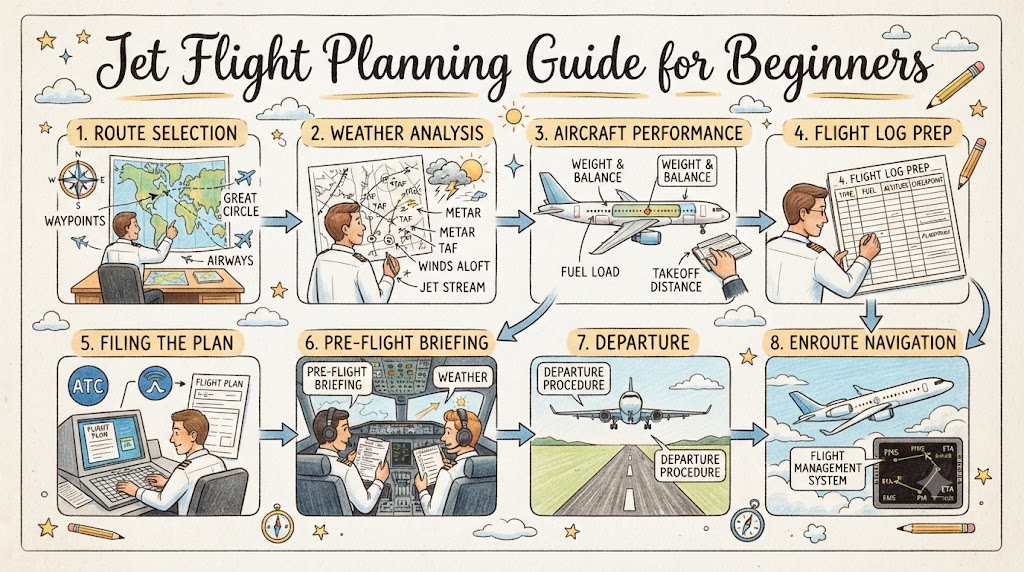
A safe and successful jet flight begins long before the aircraft leaves the ground. Pilots, dispatchers, operators, ground handlers, and airport teams must review many details before departure.
This preparation is called flight planning.
Jet flight planning includes selecting a suitable route, checking weather, calculating fuel, reviewing aircraft performance, confirming airport facilities, planning alternate airports, and completing required operational documents.
Private jets often operate on flexible schedules and use airports that may not receive regular airline traffic. This makes careful planning especially important. A small change in weather, passenger count, baggage weight, runway condition, or airport opening time can affect the entire journey.
This beginner-friendly guide explains the main parts of jet flight planning and shows how different operational decisions work together.
What Is Jet Flight Planning?
Jet flight planning is the process of preparing an aircraft, crew, route, and operating plan for a specific flight.
A complete plan considers:
- Departure airport
- Destination airport
- Flight route
- Weather conditions
- Airspace restrictions
- Fuel requirements
- Aircraft weight
- Runway performance
- Alternate airports
- Passenger and baggage details
- Airport operating hours
- Ground handling
- Customs and immigration
- Crew duty limits
- Required permits and airport slots
The goal is not only to reach the destination. The flight must also remain safe, legal, practical, and efficient from departure through arrival.
Who Prepares a Jet Flight Plan?
Flight planning can involve several people.
Pilots
The pilots review and approve the operational plan. The captain remains responsible for confirming that the flight can be completed safely.
Pilots may review:
- Route
- Weather
- Fuel
- Aircraft performance
- Runway conditions
- Notices to airmen
- Alternate airports
- Takeoff and landing calculations
Flight Dispatchers or Operations Teams
An operations team may prepare the initial flight plan and coordinate supporting services.
Its responsibilities can include:
- Route preparation
- Fuel calculations
- Permit requests
- Slot coordination
- Ground handling
- Customs arrangements
- Crew scheduling
- Weather monitoring
Ground Handlers
Ground handlers support the aircraft at the departure and destination airports.
They may arrange:
- Parking
- Fuel
- Passenger assistance
- Baggage handling
- Catering
- Ground transportation
- Customs coordination
- Crew services
Air Traffic Control
Air traffic control reviews the filed flight plan and provides clearances during the journey.
Controllers may change the planned route because of:
- Traffic congestion
- Weather
- Restricted airspace
- Military activity
- Airport conditions
- Flow-control measures
Main Stages of Jet Flight Planning
A private jet flight is normally planned through several connected stages.
| Planning Stage | Main Purpose |
|---|---|
| Mission review | Understand the passengers, route and schedule |
| Airport selection | Confirm suitable departure, destination and alternate airports |
| Route planning | Choose a safe and efficient path |
| Weather review | Identify conditions affecting the flight |
| Fuel planning | Calculate required fuel and reserves |
| Weight and balance | Confirm safe aircraft loading |
| Performance planning | Check runway and aircraft capability |
| Regulatory planning | Arrange permits, slots and border requirements |
| Ground coordination | Organize fuel, handling, catering and transport |
| Final briefing | Review all information before departure |
Each stage can affect the others. For example, extra baggage may reduce the amount of fuel the aircraft can carry, which may create the need for a fuel stop.
Understanding the Flight Mission
Before planning begins, the operator must understand the complete mission.
Important questions include:
- How many passengers are travelling?
- What is the departure location?
- What is the destination?
- What departure time is requested?
- Is the flight domestic or international?
- How much baggage will be carried?
- Are pets travelling?
- Is special catering required?
- Does anyone need mobility support?
- Must the aircraft wait at the destination?
- Is a return flight planned on the same day?
A clear mission description helps the planning team select a suitable aircraft and airport.
Choosing the Right Aircraft
Not every jet is suitable for every journey.
Aircraft selection depends on:
- Route distance
- Passenger count
- Baggage volume
- Runway length
- Airport elevation
- Weather
- Cabin requirements
- Fuel availability
- Operating cost
Light Jets
Light jets are suitable for shorter journeys and smaller passenger groups. They can often use regional airports but may have limited baggage space and range.
Midsize Jets
Midsize jets generally provide more cabin room, range, and baggage capacity. They are useful for medium-distance business travel.
Large-Cabin Jets
Large-cabin and long-range jets can operate longer international flights and carry more passengers, baggage, and fuel. However, they may need longer runways and larger airport facilities.
The best aircraft is not always the biggest one. The planning team must balance comfort, capability, airport access, and cost.
Selecting the Departure Airport
The nearest airport may not always be the most suitable airport.
Planners must review:
- Runway length
- Runway surface
- Airport elevation
- Operating hours
- Weather
- Fuel availability
- Ground handling
- Aircraft parking
- Noise restrictions
- Departure slots
- Security procedures
- Passenger access
A small airport may be closer to the passenger but unable to support the selected aircraft.
Selecting the Destination Airport
Destination planning requires more than choosing a city.
The airport must be suitable for:
- Aircraft size
- Landing performance
- Available runway
- Weather conditions
- Customs and immigration
- Ground transportation
- Parking duration
- Fuel requirements
- Airport opening hours
Private aviation can use many regional and executive airports that commercial airlines do not serve. This may reduce ground travel time and bring passengers closer to their final destination.
However, smaller airports may offer limited services.
Planning an Alternate Airport
An alternate airport is a backup airport that may be used when landing at the planned destination is not possible or advisable.
A diversion may be required because of:
- Poor weather
- Runway closure
- Aircraft emergency
- Airport congestion
- Security issue
- Air traffic restrictions
- Fuel concern
- Medical situation
A suitable alternate airport should have:
- Adequate runway length
- Acceptable weather
- Compatible navigation facilities
- Suitable operating hours
- Required fuel
- Ground services
- Customs support when necessary
An airport that looks close on a map may not be operationally suitable.
Route Planning
The most direct route is not always the route that an aircraft can fly.
Flight planners consider:
- Airways
- Navigation points
- Controlled airspace
- Restricted airspace
- Military zones
- Weather systems
- Aircraft performance
- Air traffic flow
- Overflight permissions
- Fuel efficiency
The route may change before or during the flight.
For example, a direct path may cross restricted airspace or severe weather. The aircraft may need to fly around that area, increasing distance and fuel use.
Understanding Flight Levels
Jets usually fly at higher altitudes than many smaller aircraft.
Flying higher can provide:
- Better fuel efficiency
- Smoother air
- Faster true airspeed
- Reduced traffic conflicts
- More direct routing in some areas
However, the best cruising altitude depends on:
- Aircraft weight
- Wind
- Weather
- Air traffic control
- Route length
- Aircraft capability
A heavily loaded jet may initially cruise at a lower altitude and climb higher after burning fuel.
Weather Planning
Weather is one of the most important parts of flight planning.
Pilots and planners review:
- Wind direction and speed
- Visibility
- Cloud height
- Thunderstorms
- Turbulence
- Icing
- Temperature
- Fog
- Rain or snow
- Jet-stream conditions
- Weather at alternate airports
Weather affects route selection, fuel planning, flight time, passenger comfort, and airport suitability.
Departure Weather
Departure weather can affect:
- Takeoff visibility
- Runway selection
- Aircraft performance
- De-icing requirements
- Ground delays
- Departure routing
Strong winds, heavy rain, snow, thunderstorms, or low visibility may delay or prevent departure.
En Route Weather
Weather along the route can create:
- Turbulence
- Thunderstorm deviations
- Icing risk
- Strong headwinds
- Longer flight time
- Additional fuel use
Pilots may request a different altitude or route to avoid unsafe or uncomfortable conditions.
Destination Weather
Destination weather must be checked carefully.
Important factors include:
- Visibility
- Cloud ceiling
- Wind
- Runway condition
- Thunderstorms
- Fog
- Snow
- Crosswind limits
If the destination weather is uncertain, the crew may carry additional fuel or select a stronger alternate plan.
Aviation Weather Reports
Pilots use several aviation weather products.
METAR
A METAR provides current reported weather at an airport.
It can include:
- Wind
- Visibility
- Cloud
- Temperature
- Atmospheric pressure
- Rain, snow, fog, or thunderstorms
TAF
A TAF provides a forecast for a specific airport.
It helps planners estimate conditions around the expected departure or arrival time.
Weather Charts
Weather charts show larger systems such as:
- Pressure areas
- Fronts
- Thunderstorms
- Winds
- Turbulence
- Icing
Weather information is reviewed continuously because conditions can change after the initial plan is prepared.
Reviewing NOTAMs
A NOTAM is an operational notice containing information important to flight crews.
NOTAMs may report:
- Runway closures
- Taxiway closures
- Navigation equipment outages
- Airport construction
- Lighting problems
- Airspace restrictions
- Military activity
- Fuel limitations
- Parking restrictions
- Changes in operating hours
A flight may be delayed, rerouted, or cancelled when a critical facility is unavailable.
Beginners should understand that NOTAMs can be numerous and technical. Pilots must identify which notices directly affect the planned flight.
Jet Fuel Planning
Fuel planning is more detailed than estimating the distance between two airports.
A jet may need fuel for:
- Engine start
- Taxi
- Takeoff
- Climb
- Cruise
- Descent
- Approach
- Landing
- Diversion
- Holding
- Required reserves
- Unexpected delays
The final fuel amount depends on the aircraft, route, weather, weight, and regulations.
Main Fuel Categories
Taxi Fuel
Taxi fuel covers engine operation and aircraft movement before takeoff.
Trip Fuel
Trip fuel is the estimated amount needed to fly from departure to destination.
Contingency Fuel
Contingency fuel provides protection against unexpected route changes, winds, or delays.
Alternate Fuel
Alternate fuel allows the aircraft to continue from the destination to a selected alternate airport.
Reserve Fuel
Reserve fuel is protected for safety and regulatory requirements.
Additional Fuel
The crew may add fuel because of:
- Poor weather
- Busy airspace
- Remote airports
- Limited alternates
- Expected holding
- Fuel uncertainty at the destination
Why Carrying More Fuel Is Not Always Better
Extra fuel improves flexibility, but fuel is heavy.
Carrying unnecessary fuel can:
- Increase takeoff weight
- Increase fuel consumption
- Reduce payload capacity
- Reduce climb performance
- Affect runway requirements
- Increase operating cost
The crew must balance safety, flexibility, weight, and efficiency.
Weight and Balance Planning
Every aircraft must remain within approved weight and balance limits.
The calculation includes:
- Aircraft operating weight
- Passengers
- Crew
- Baggage
- Catering
- Fuel
- Special equipment
The total weight must remain below limits for:
- Ramp movement
- Takeoff
- Landing
- Aircraft structure
Balance is equally important. Weight must be distributed so that the aircraft’s centre of gravity remains within the approved range.
Why Passenger and Baggage Information Matters
Private jet passengers may assume that baggage is unlimited, but every aircraft has physical and weight restrictions.
The operator should know:
- Number of bags
- Bag dimensions
- Approximate weight
- Oversized items
- Sports equipment
- Medical equipment
- Pet carriers
Heavy or oversized baggage may require:
- A larger aircraft
- Reduced fuel
- A fuel stop
- Separate transport
- A different seating arrangement
Providing baggage details early prevents last-minute problems.
Aircraft Performance Planning
Aircraft performance calculations confirm whether the jet can safely take off and land at the selected airports.
Planners consider:
- Runway length
- Runway slope
- Runway condition
- Airport elevation
- Air temperature
- Wind
- Aircraft weight
- Obstacles
- Engine performance
Hot and High Airports
Aircraft performance decreases when temperatures and airport elevations are high.
At a hot or high airport, a jet may need:
- A longer runway
- Reduced passenger load
- Reduced baggage
- Less fuel
- A different departure time
- A fuel stop
- Another airport
Morning departures may sometimes provide better performance because temperatures are lower.
Wet or Contaminated Runways
Rain, snow, slush, ice, or standing water can increase takeoff and landing distance.
Pilots must review:
- Braking action
- Runway contamination
- Crosswind
- Aircraft limitations
- Available runway length
A runway that is acceptable when dry may not be suitable when contaminated.
Airport Operating Hours
Private jets cannot always depart whenever passengers choose.
Airports may have:
- Closing times
- Night restrictions
- Noise curfews
- Weekend limitations
- Holiday schedules
- Customs operating hours
- Fire-service restrictions
A delayed passenger may cause the flight to miss an airport closing time.
Flight planners should confirm both departure and destination operating hours, including possible delays.
Airport Slots
Busy airports may require an approved arrival or departure slot.
A slot assigns a permitted operating time.
Slots may be affected by:
- Airport capacity
- Commercial traffic
- Major events
- Seasonal demand
- Weather
- Runway restrictions
Private aviation offers scheduling flexibility, but slot-controlled airports may limit that flexibility.
Late schedule changes may require a new slot.
Prior Permission Required
Some airports require prior approval before an aircraft can land.
This is often called Prior Permission Required, or PPR.
The request may include:
- Aircraft registration
- Aircraft type
- Operator
- Arrival time
- Departure time
- Passenger count
- Purpose of flight
- Parking duration
Approval should be confirmed before departure.
International Flight Permits
International flights may require permits to enter or cross certain countries.
These may include:
- Landing permits
- Overflight permits
- Diplomatic permits
- Charter permits
- Special operating approvals
Permit requirements depend on:
- Country
- Aircraft registration
- Operator nationality
- Commercial or private status
- Passenger purpose
- Route
- Aircraft type
Permit delays can affect the departure schedule, so applications should begin early.
Customs and Immigration Planning
International private jet flights must comply with border-control requirements.
Planning may include:
- Passport review
- Visa verification
- Passenger manifest submission
- Crew documentation
- Customs appointment
- Immigration coordination
- Health documents
- Pet documentation
- Agricultural declarations
Not every airport can process international arrivals.
The selected airport must have customs and immigration facilities or approved advance arrangements.
Crew Duty and Rest Planning
Pilots cannot operate without limits.
Crew duty regulations control:
- Maximum working period
- Flight time
- Minimum rest
- Number of sectors
- Night operations
- Time-zone effects
Passenger delays can affect crew legality.
When the crew reaches its duty limit, the flight may require:
- Replacement pilots
- Additional rest
- A delayed departure
- Overnight accommodation
Crew planning is therefore an important part of the complete itinerary.
Ground Handling Planning
A ground handler supports the aircraft before departure and after arrival.
Required services may include:
- Aircraft parking
- Refuelling
- Passenger reception
- Baggage loading
- Catering
- Cabin cleaning
- Ground power
- Water servicing
- Lavatory servicing
- Crew transport
- Hotel arrangements
- Customs support
The planning team should confirm that all required services are available at each airport.
Private Jet Catering
Catering should be ordered according to:
- Passenger preferences
- Flight duration
- Dietary needs
- Aircraft galley capability
- Airport availability
A small jet may support only cold meals or reheated food, while a larger jet may have more advanced galley facilities.
Special meals should be ordered early, especially at remote airports.
Ground Transportation
Private aviation planning often includes the journey before and after the flight.
Ground transport may involve:
- Chauffeur-driven cars
- Hotel transfers
- Rental vehicles
- Taxis
- Helicopter connections
- Ambulances
- Secure transport
The transport provider needs accurate arrival information and updates if the flight schedule changes.
Flight Plan Filing
Before departure, an official flight plan is filed with the appropriate air traffic service.
It generally includes:
- Aircraft identification
- Aircraft type
- Equipment
- Departure airport
- Departure time
- Cruising speed
- Cruising altitude
- Route
- Destination
- Estimated flight time
- Alternate airport
- Fuel endurance
- People onboard
The filed plan helps air traffic services manage and monitor the flight.
It is different from the full operational plan used by the crew, which may contain additional fuel, weather, performance, and commercial information.
Final Preflight Review
Before departure, the pilots complete a final review.
They may confirm:
- Aircraft condition
- Route
- Weather
- NOTAMs
- Fuel quantity
- Passenger count
- Baggage loading
- Weight and balance
- Takeoff performance
- Alternate airport
- Airport slot
- Required permits
- Crew duty time
- Customs clearance
Any major change may require the plan to be recalculated.
Last-Minute Changes
Private aviation allows flexibility, but last-minute changes can create operational complications.
Examples include:
- Adding a passenger
- Adding heavy baggage
- Changing destination
- Delaying departure
- Requesting a new airport
- Adding a pet
- Changing catering
- Requesting an international route
A simple passenger request may affect:
- Fuel
- Weight
- Permits
- Customs
- Airport slots
- Crew duty
- Aircraft range
- Ground handling
Passengers should communicate changes as early as possible.
What Can Delay a Jet Flight?
Common causes of delay include:
- Poor weather
- Air traffic congestion
- Late passengers
- Aircraft maintenance
- Fuel delivery
- Missing permits
- Airport slot changes
- Customs delays
- Crew duty limits
- Baggage problems
- Runway closures
- Ground handling issues
Good planning reduces risk but cannot eliminate every delay.
Flight Planning Example
Consider a private jet journey with six passengers travelling from one country to another.
The planning team may need to:
- Select an aircraft with enough range and baggage capacity.
- Confirm that both airports accept the aircraft.
- Review runway length and weather.
- Select a suitable alternate airport.
- Calculate trip, reserve and alternate fuel.
- Confirm passenger passports and visas.
- Request overflight or landing permits.
- Reserve airport slots and parking.
- Arrange fuel, catering and ground transport.
- Check crew duty limits.
- File the flight plan.
- Complete the final crew briefing.
If the passengers later add several heavy bags, the operator may need to reduce fuel and schedule a fuel stop.
This example shows how one small change can affect the entire flight plan.
Beginner Jet Flight Planning Checklist
Passenger and Mission Details
- Confirm passenger count.
- Confirm full passenger names.
- Review baggage quantity.
- Declare pets and special equipment.
- Confirm departure and destination.
- Record the requested schedule.
Aircraft and Airport
- Select a suitable aircraft.
- Check runway length.
- Confirm airport operating hours.
- Verify parking availability.
- Review fuel and handling services.
- Select an alternate airport.
Weather and Route
- Review departure weather.
- Review en route weather.
- Review destination weather.
- Check alternate weather.
- Review NOTAMs.
- Prepare the route.
Fuel and Performance
- Calculate taxi fuel.
- Calculate trip fuel.
- Add contingency fuel.
- Add alternate fuel.
- Confirm reserve fuel.
- Complete weight and balance.
- Calculate takeoff and landing performance.
Operational Requirements
- Confirm airport slots.
- Request required permits.
- Arrange customs and immigration.
- Check crew duty limits.
- Order catering.
- Arrange ground transportation.
- File the official flight plan.
Common Flight Planning Mistakes
Choosing an Airport Only by Location
The closest airport may have an unsuitable runway, limited hours, or no customs service.
Ignoring Baggage Details
Excess baggage can affect fuel, weight, and aircraft selection.
Assuming Fuel Is Always Available
Smaller airports may have limited fuel stocks or operating hours.
Forgetting the Alternate Airport
A backup airport must be practical, available, and suitable for the aircraft.
Planning Without Weather Flexibility
Weather changes can increase flight time and fuel requirements.
Ignoring Crew Duty Limits
Even if the aircraft and airport are available, the pilots may not be legally able to continue.
Making Late Passenger Changes
New passengers may require updated manifests, permits, weight calculations, and border filings.
Tips for Better Jet Flight Planning
Beginners should remember these basic principles:
- Start planning early.
- Provide accurate passenger details.
- Share baggage information.
- Confirm airport services.
- Review weather continuously.
- Plan a realistic alternate.
- Carry adequate fuel reserves.
- Consider aircraft weight carefully.
- Check crew duty limits.
- Update the plan when conditions change.
- Maintain direct communication with handlers and passengers.
- Never prioritize schedule over safety.
Frequently Asked Questions
Who approves the final jet flight plan?
The flight-planning team may prepare the plan, but the captain reviews and accepts the operational details before departure.
Can a private jet fly directly to any airport?
No. The airport must have a suitable runway, operating approval, required services, and any necessary customs facilities.
Why does a jet need an alternate airport?
An alternate provides a safe backup when the destination cannot be used because of weather, runway closure, traffic, or another operational issue.
How is jet fuel calculated?
Fuel is calculated using route distance, aircraft performance, weather, expected delays, alternate requirements, and legal reserves.
Can passengers change the destination during the flight?
It may be possible, but the crew must review fuel, airport suitability, weather, permits, customs, and crew duty limits.
Does extra baggage affect the flight plan?
Yes. Extra baggage increases aircraft weight and may reduce the amount of fuel or passengers the aircraft can carry.
Why do private jets sometimes make fuel stops?
A fuel stop may be required because of range, wind, payload, runway limitations, or fuel availability.
Can bad weather cancel a private jet flight?
Yes. Private jets remain subject to weather, aircraft limitations, airport conditions, and safety requirements.
Are private jet departure times guaranteed?
No exact departure time can be guaranteed because weather, air traffic, airport slots, technical issues, and other factors may cause delays.
Is flight planning completed only once?
No. The plan is reviewed and updated as weather, passenger details, airport conditions, and operational information change.
Conclusion
Jet flight planning is a detailed process that connects the aircraft, route, weather, fuel, passengers, airports, crew, and ground services. A safe plan must include suitable departure and destination airports, a practical alternate, accurate fuel calculations, weight and balance checks, aircraft performance, permits, slots, and border requirements. For beginners, the most important lesson is that every planning decision affects another part of the journey. Early preparation, accurate information, and continuous review help private jet operations remain safe, efficient, and reliable.
