
Introduction
Private jet travel is known for comfort, privacy, and flexibility. One important part of this experience is food and catering. Unlike regular airline food, private jet catering is usually more personalized. Passengers can often request meals based on their taste, health needs, culture, schedule, and flight duration.
Private jet dining is not only about luxury. It is also about comfort, convenience, and planning. A business traveler may need a light meal before a meeting. A family may need child-friendly snacks. A long-distance passenger may need healthy food that helps them feel fresh after landing.
What Is Private Jet Catering?
Private jet catering means arranging food and drinks for passengers travelling on a private aircraft. It can include snacks, breakfast, lunch, dinner, beverages, desserts, special diet meals, and custom food requests.
Unlike commercial flights, private jet catering is often planned around the passenger. The menu may depend on the aircraft size, flight time, passenger preferences, airport location, and catering provider.
Private jet catering can be simple or premium. Some flights may only need coffee, fruit, and sandwiches. Other flights may include restaurant-style meals, luxury platters, or customized menus.
Why Food and Catering Matter in Private Jet Travel
Food plays an important role in the private aviation experience. A well-planned meal can make the journey more comfortable and enjoyable.
For business travelers, catering helps save time. They can eat during the flight and arrive ready for meetings. For families, food keeps children comfortable and reduces travel stress. For long-distance flyers, balanced meals and proper hydration help reduce tiredness.
Good catering also supports health, mood, and energy during the journey. This is why food planning should not be treated as a small detail.
Main Types of Food Served on Private Jets
1. Light Snacks
Light snacks are common on short private jet flights. These may include nuts, chips, crackers, biscuits, energy bars, or small sandwiches.
Snacks are easy to serve and do not require much preparation. They are useful when the flight is short or when passengers do not want a full meal.
2. Breakfast Options
Breakfast catering may include fruit, pastries, toast, eggs, yogurt, cereal, coffee, tea, and fresh juice. Business travelers often prefer simple and clean breakfast options before morning meetings.
For early flights, breakfast should be easy to eat and not too heavy. Fresh and light food usually works best.
3. Lunch and Dinner Meals
Lunch and dinner options may include salads, pasta, rice dishes, grilled vegetables, chicken, fish, or other passenger-requested meals. The exact menu depends on the catering provider and aircraft facilities.
Some passengers prefer formal meals, while others prefer simple cabin-friendly food. The best choice depends on flight length and passenger comfort.
4. Fresh Fruits and Salads
Fresh fruits and salads are popular because they are light, healthy, and easy to serve. They are also suitable for passengers who want to avoid heavy food during travel.
Fruit platters, green salads, and fresh bowls are often good choices for daytime flights.
5. Hot Meals
Hot meals may be available on many private jet flights, especially on midsize, heavy, and long-range jets. However, this depends on the aircraft’s galley equipment and catering arrangement.
Passengers should confirm in advance if hot meals can be served, because not every aircraft has the same reheating or serving facilities.
6. Cold Platters
Cold platters are practical and popular in private jet catering. These may include sandwiches, cheese, fruits, salads, desserts, or light meal boxes.
They are easier to store and serve than complex hot meals. For short and medium flights, cold platters are often a safe and comfortable option.
7. Desserts and Sweets
Desserts may include cakes, pastries, chocolates, cookies, or fruit-based sweets. These can make the flight feel more premium and enjoyable.
For luxury travel, dessert presentation can add to the overall onboard dining experience.
8. Beverages and Refreshments
Private jet catering usually includes beverages such as water, tea, coffee, juices, soft drinks, and other refreshments. Hydration is very important during air travel.
Passengers should request preferred beverages before the flight, especially if they want a specific brand or special drink.
9. Children’s Meal Options
Families travelling with children may request simple meals such as sandwiches, pasta, fruits, snacks, juices, or mild food options.
Child-friendly catering should be easy to eat, not too messy, and suitable for the child’s age and preferences.
10. Special Diet Meals
Many passengers request special meals based on health, religion, lifestyle, or personal preference. These may include vegetarian, vegan, gluten-free, low-sugar, low-salt, halal, kosher, or allergy-sensitive meals.
Special requests should be shared early so the catering team has enough time to prepare properly.
11. Regional and Cultural Food Choices
Private jet passengers may request regional or cultural food based on personal taste. This can include Indian, Middle Eastern, European, Asian, or local cuisine.
Availability depends on the departure airport and catering provider. Some locations may have more options than others.
12. Restaurant or Hotel-Sourced Meals
In some cases, passengers may request food from a specific restaurant, hotel, or chef. This is possible on certain flights, but it must be arranged in advance.
Passengers should remember that aircraft service has storage and safety limits, so not every restaurant meal may be suitable for flight.
13. Healthy Travel Meals
Healthy meals are becoming more popular in private aviation. Passengers may prefer fresh salads, lean protein, fruit, soups, low-oil meals, or hydration-focused options.
Healthy food helps passengers feel lighter and more comfortable, especially before business meetings or long journeys.
14. Luxury Dining Options
Luxury private jet catering may include gourmet meals, premium presentation, fine ingredients, and personalized service. On larger jets, the dining experience can feel more like a private lounge or high-end restaurant.
However, luxury dining still depends on aircraft facilities, flight duration, and advance planning.
15. Custom Passenger Requests
One of the biggest benefits of private jet catering is customization. Passengers may request favorite meals, preferred snacks, special drinks, birthday cakes, or comfort food.
The earlier the request is made, the better the chances of arranging it properly.
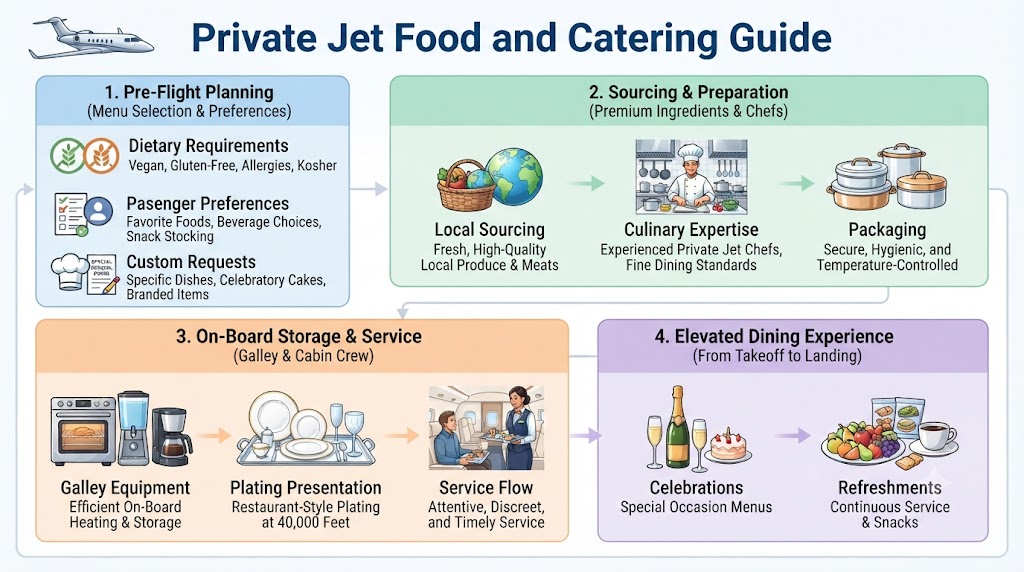
How Private Jet Catering Works
Private jet catering usually follows a simple process.
First, the passenger shares food preferences with the operator, charter company, or flight support team. These preferences may include meal type, dietary needs, allergies, beverage choices, and serving time.
Next, the operator confirms what is possible based on the aircraft, airport, flight duration, and catering provider. The catering company then prepares the food and packs it safely for aircraft use.
Before departure, the crew loads the food into the aircraft. During the flight, meals are served based on passenger comfort, cabin space, and flight conditions.
Private Jet Catering by Flight Duration
Short Flights
Short flights usually need light snacks, drinks, coffee, tea, sandwiches, or fruit. Heavy meals may not be necessary because flight time is limited.
Medium Flights
Medium flights may include snacks, cold platters, breakfast, lunch, or light hot meals. Passengers may want enough food to stay comfortable without feeling too full.
Long-Distance Flights
Long flights require better meal planning. Passengers may need multiple meals, snacks, beverages, and hydration support. Special diets should be planned carefully.
Overnight Flights
Overnight flights may need dinner, light snacks, breakfast, and sleep-friendly food. Heavy or spicy meals may not be ideal for passengers who want to rest.
International Flights
International private jet catering may include regional food, special dietary needs, customs rules, and airport catering availability. Planning becomes more important on international routes.
Business Dining on Private Jets
Business travelers often prefer clean, light, and easy-to-eat meals. They may need food that does not disturb work, meetings, or document review.
Good business catering may include:
- Coffee and tea
- Fresh fruit
- Light sandwiches
- Salads
- Working lunches
- Bottled water
- Simple hot meals
- Low-mess snacks
The goal is to support productivity while keeping the cabin clean and comfortable.
Family-Friendly Jet Catering
Families need practical food choices. Children may prefer simple snacks, fruit, juices, sandwiches, pasta, or familiar meals.
Parents should share food preferences and allergy details before the flight. It is also better to avoid very messy food, strong-smelling food, or items that are difficult to serve in a small cabin.
Luxury Food Experience in Private Aviation
Private jet food can be a premium part of the journey. Luxury catering may include elegant presentation, fresh ingredients, customized menus, premium desserts, and personalized service.
In larger jets, passengers may enjoy dining at proper tables with a more relaxed cabin setup. The food experience becomes part of the overall luxury flight experience.
Special Diet and Allergy Considerations
Special diets should always be communicated early. Passengers may request vegetarian, vegan, gluten-free, low-salt, low-sugar, religious, medical, or allergy-sensitive meals.
Allergy details are especially important. The catering team and crew should know if a passenger has serious food allergies. This helps reduce risk and improves passenger confidence.
Food Safety and Cabin Limitations
Private jet food service has some limits. Aircraft cabins have limited storage space, limited reheating options, and specific safety requirements.
Some foods may not be ideal for a flight because they create strong smells, spill easily, or need complex preparation. Turbulence can also affect meal service, so cabin-friendly food is always a smart choice.
Food should be packed safely, stored properly, and served in a way that matches aircraft conditions.
Things to Check Before Booking or Flying
Before flying, passengers should ask:
- Is catering included in the booking?
- What menu options are available?
- Can special meals be requested?
- How early should food preferences be shared?
- Are hot meals available?
- Are beverages included?
- Can restaurant food be arranged?
- Are allergy needs supported?
- Is catering suitable for children?
- Are there extra catering charges?
- Is there enough storage for longer flights?
These questions help avoid confusion and improve the onboard dining experience.
Common Mistakes People Make
A common mistake is assuming every private jet has a full kitchen. Many aircraft have limited galley space and may not support complex cooking.
Another mistake is requesting special meals too late. Some food items need advance planning, especially on international routes or at smaller airports.
Passengers may also forget to mention allergies, dietary restrictions, or children’s food needs. These details should always be shared before departure.
Future of Private Jet Food and Catering
Private jet catering is becoming more personalized and health-focused. Passengers are showing more interest in fresh meals, plant-based options, sustainable packaging, lighter menus, and local cuisine.
Future private jet food service may focus more on wellness, custom meal planning, and better onboard presentation. The goal will remain the same: comfort, safety, and personal choice.
FAQs
1. What is private jet catering?
Private jet catering is the arrangement of food and drinks for passengers travelling on a private aircraft. It can include snacks, meals, beverages, desserts, and special diet options.
2. What food is served on private jets?
Private jets may serve snacks, breakfast, lunch, dinner, fruits, salads, desserts, beverages, hot meals, cold platters, and custom passenger-requested food.
3. Can passengers choose their own meals?
Yes, passengers can often choose their meals in advance. Options depend on the aircraft, airport, catering provider, and flight schedule.
4. Are hot meals available on private jets?
Hot meals may be available on many private jets, especially larger aircraft. However, passengers should confirm this before flying.
5. Can private jets serve vegetarian or vegan meals?
Yes, vegetarian and vegan meals can usually be arranged if requested early. Other special diets may also be available.
6. Is catering included in private jet booking?
It depends on the operator and booking type. Some catering may be included, while premium or special requests may cost extra.
7. Can restaurant food be arranged for a private jet flight?
In some cases, restaurant food can be arranged. It should be requested in advance, and the food must be suitable for aircraft storage and service.
8. What food is best for short private jet flights?
For short flights, light snacks, fruit, sandwiches, coffee, tea, juice, and water are usually good choices.
9. Are special diet and allergy meals available?
Yes, special diet and allergy-sensitive meals can often be arranged. Passengers should share these details early for better preparation.
10. What should I check before ordering private jet catering?
Check menu options, special diet support, hot meal availability, beverage choices, catering charges, allergy handling, and how early requests must be submitted.
Conclusion
Private jet food and catering are important parts of the luxury flying experience. Good catering supports comfort, health, convenience, and passenger satisfaction.
From light snacks and breakfast to special diet meals and luxury dining, private jet catering can be planned around the passenger’s needs. The key is to share preferences early, understand aircraft limitations, and choose food that matches the flight duration.
