
Introduction
Business jets are designed for speed, privacy, flexibility, and comfort. But the real experience of a business jet is not only about the aircraft engine, range, or exterior look. A major part of the travel experience comes from the cabin.
The cabin is where passengers sit, work, relax, eat, sleep, hold meetings, and spend their flight time. This is why business jet cabin design is so important.
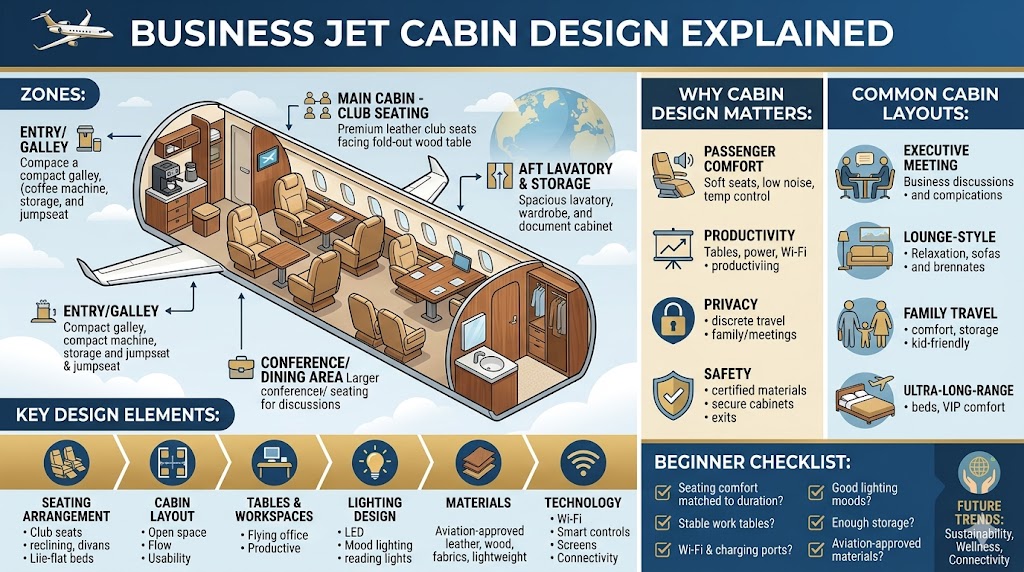
Business Jet Cabin Design Explained means understanding how the inside of a business aircraft is planned and created. It includes the seating layout, lighting, materials, technology, storage, comfort features, safety systems, and overall passenger experience.
For beginners, business jet cabin design may look like luxury decoration. But in reality, it is much more than that. A good cabin must balance comfort, safety, productivity, space, weight, privacy, and style.
This guide explains business jet cabin design in simple language so beginners can understand how private aviation interiors are planned and why every detail matters.
What Is Business Jet Cabin Design?
Business jet cabin design is the process of planning and arranging the interior space of a business aircraft. It includes all passenger-facing areas inside the cabin.
This may include:
- Seats
- Tables
- Cabin layout
- Lighting
- Flooring
- Sidewalls
- Ceiling panels
- Storage spaces
- Galley area
- Lavatory
- Entertainment systems
- Wi-Fi and connectivity
- Cabin controls
- Climate control
- Safety features
The main goal of business jet cabin design is to create a cabin that is comfortable, practical, safe, and suitable for the passenger’s travel needs.
A business jet cabin is different from a regular airline cabin. In commercial aircraft, the focus is mostly on carrying many passengers efficiently. In a business jet, the focus is on privacy, comfort, productivity, and personalized travel.
A well-designed business jet cabin can feel like a flying office, a private lounge, a meeting room, or even a resting space, depending on the aircraft size and layout.
Why Cabin Design Matters in Business Jets
Cabin design matters because passengers spend most of their flight time inside the cabin. A poorly planned cabin can feel uncomfortable, crowded, noisy, or difficult to use. A well-planned cabin makes flying easier, smoother, and more enjoyable.
Business jet cabin design affects many important areas.
Passenger Comfort
Comfort is one of the biggest reasons people choose business jets. Wide seats, soft lighting, proper temperature control, low noise, and enough space can make the journey more relaxing.
Business Productivity
Many passengers use business jets to save time. A good cabin allows them to work during the flight. Tables, power outlets, Wi-Fi, privacy, and meeting-friendly seating help passengers stay productive.
Privacy
Private aviation is valued for privacy. A good cabin design allows passengers to talk, work, relax, or travel with family without public disturbance.
Safety
Every cabin feature must follow aviation safety requirements. Seats, tables, materials, storage, lighting, and equipment must be safe for flight conditions.
Aircraft Value
A clean, modern, and practical cabin can improve the aircraft’s appeal. Buyers and charter customers often notice cabin condition before making decisions.
Travel Experience
The cabin design shapes the complete feeling of the journey. It can make a short flight feel comfortable and a long flight feel less tiring.
Main Elements of Business Jet Cabin Design
Business jet cabin design includes many parts. Each part plays a different role in comfort, safety, and usability.
Seating Arrangement
Seats are the center of the cabin experience. They should be comfortable, properly placed, and suitable for the aircraft’s purpose.
In many business jets, seats may face each other so passengers can talk or hold meetings. Some seats can recline, rotate, or convert into sleeping positions.
Cabin Layout
The cabin layout decides how the interior space is used. It includes seat placement, walking space, table position, storage areas, galley location, and lavatory access.
A good layout should feel open, easy to move through, and suitable for the type of travel.
Tables and Workspaces
Business jets often include tables for laptops, meals, documents, and meetings. These tables may be foldable, sliding, or fixed.
For executive travelers, table design is very important because the aircraft may be used as a flying office.
Lighting Design
Lighting affects the mood of the cabin. Soft lighting can make the cabin feel calm and luxurious. Reading lights help passengers work or read. Mood lighting can create a relaxed atmosphere during long flights.
Modern cabins often use LED lighting because it is efficient, flexible, and easier to control.
Flooring and Carpets
Flooring adds comfort and style. Carpets are common in business jets because they reduce noise and make the cabin feel warmer.
The flooring must be durable, lightweight, and suitable for aviation use.
Sidewall and Ceiling Panels
Sidewall and ceiling panels shape the look of the cabin. They may include leather, fabric, wood-style finishes, or modern lightweight materials.
These panels also help improve sound insulation and cabin comfort.
Storage Areas
Storage is very important in a business jet because space is limited. Good storage keeps the cabin clean and organized.
Storage may include side cabinets, wardrobes, document compartments, baggage areas, and small personal item spaces.
Galley Space
The galley is the area used for food and drinks. In small jets, the galley may be simple. In larger jets, it may include coffee machines, ovens, refrigerators, storage cabinets, and serving counters.
Lavatory Design
The lavatory is the aircraft restroom. Its size and features depend on the aircraft type. Large business jets may have more spacious and premium lavatories, while smaller jets may have compact facilities.
Entertainment Systems
Entertainment systems may include screens, speakers, media controls, and streaming options. These systems help passengers relax during the journey.
Wi-Fi and Connectivity
Modern business travelers expect internet access during flights. Wi-Fi, satellite communication, charging ports, and video conferencing tools are now important parts of business aircraft interior design.
Climate Control
Climate control helps maintain a comfortable cabin temperature. Some aircraft allow separate temperature zones so different passengers can adjust comfort levels.
Safety Features
Safety features include seat belts, emergency lighting, certified seats, fire-resistant materials, secure cabinets, and proper emergency access.
A business jet cabin must look good, but it must also be safe and reliable.
Common Business Jet Cabin Layouts
Different business jets use different cabin layouts based on aircraft size, passenger needs, and flight purpose.
Executive Meeting Layout
This layout is designed for business discussions. Seats may face each other around tables, making it easy to hold meetings during flight.
Club Seating Layout
Club seating is one of the most common layouts in business jets. It usually includes four seats facing each other in pairs. This layout is good for conversation, work, and dining.
Conference Cabin Layout
A conference layout includes a larger table with multiple seats around it. It is ideal for corporate teams that need to discuss projects while traveling.
Lounge-Style Layout
A lounge layout focuses on relaxation. It may include sofas, soft seating, entertainment screens, and open space.
Family Travel Layout
A family layout focuses on comfort, storage, and entertainment. It may include relaxed seating, easy movement, and features suitable for children or elderly passengers.
Long-Range Sleeping Layout
Long-range jets often include lie-flat seats, divans, or sleeping sections. These layouts help passengers rest during longer flights.
VIP Luxury Layout
A VIP layout focuses on premium comfort and privacy. It may include luxury materials, custom lighting, private zones, larger seats, and advanced entertainment systems.
Business Jet Seating Design
Seating is one of the most important parts of business jet cabin design. The right seating improves comfort, productivity, and passenger satisfaction.
Club Seats
Club seats face each other and are commonly used in business jets. They are good for meetings, conversations, and meals.
Reclining Seats
Reclining seats allow passengers to relax during flight. They are useful for both short and medium-distance journeys.
Lie-Flat Seats
Lie-flat seats can convert into sleeping positions. These are useful in long-range jets where passengers may need proper rest.
Divans
A divan is similar to a sofa. It adds a lounge feeling to the cabin and may also provide extra seating or resting space.
Conference Seats
Conference seats are arranged around a table. They are useful for teams, executives, and business groups.
VIP Executive Seats
VIP seats are larger and more comfortable. They may include extra cushioning, adjustable controls, premium leather, and more personal space.
Good seating design should consider passenger comfort, safety certification, cabin movement, and flight duration.
Cabin Design for Business Productivity
Business jets are often used by executives, entrepreneurs, corporate teams, and professionals who need to save time. A well-designed cabin helps them work while traveling.
Important productivity features include:
- Stable work tables
- Laptop-friendly seating
- Charging ports
- Wi-Fi connectivity
- Video call support
- Privacy from other passengers
- Noise reduction
- Good lighting
- Comfortable seating posture
- Secure document storage
A business jet cabin can work like a private office in the sky. Passengers can review presentations, discuss business plans, join online meetings, or prepare for important events before landing.
The best productivity-focused cabin designs are not only luxurious. They are practical, quiet, organized, and easy to use.
Luxury and Comfort Features
Luxury is an important part of business jet cabin design, but good luxury should feel natural and useful. It should improve the passenger experience without making the cabin crowded or heavy.
Common luxury and comfort features include:
- Premium leather seats
- Soft LED lighting
- Fine wood veneer
- High-quality carpets
- Noise reduction materials
- Entertainment screens
- Comfortable divans
- Dining tables
- Personal reading lights
- Adjustable seats
- Private rest areas
- Smart cabin controls
- High-speed internet
- Spacious lavatory design
Comfort is not only about expensive materials. It is also about how the cabin feels during the flight. Seat angle, lighting, noise level, walking space, temperature, and privacy all contribute to comfort.
Materials Used in Business Jet Cabins
Materials used inside business jets must be attractive, durable, lightweight, and aviation-approved. Aircraft interiors cannot use just any material because safety and weight are major concerns.
Leather
Leather is commonly used for seats, side panels, and decorative surfaces. It gives the cabin a premium look and is comfortable when maintained properly.
Wood Veneer
Wood veneer is often used on tables, cabinets, and trim areas. It creates a classic executive feel.
Carbon Fiber
Carbon fiber is modern, lightweight, and strong. It is often used in contemporary business aircraft interior design.
Fabrics
Fabrics may be used on panels, seats, curtains, or decorative sections. They help improve comfort and design flexibility.
Carpets
Carpets make the cabin feel warmer and quieter. They also add a luxury feel to the interior.
Lightweight Panels
Cabin panels must be lightweight to support aircraft performance. These panels may be finished with leather, fabric, or decorative materials.
Metal Finishes
Metal finishes may be used on handles, trims, controls, and decorative details. They add a clean and premium look.
Material selection is not only about beauty. It must also support safety, durability, weight control, and easy maintenance.
Technology in Modern Business Jet Cabins
Technology has become a major part of modern business jet cabin design. Passengers now expect cabins to be connected, smart, and easy to control.
Smart Cabin Controls
Smart controls allow passengers to adjust lights, temperature, window shades, audio, and entertainment systems from a touch panel or mobile device.
Satellite Internet
Satellite internet allows passengers to stay connected during flights, especially on longer routes. It supports emails, messaging, browsing, and business communication.
Charging Ports
USB ports, power outlets, and wireless charging areas are important for phones, tablets, and laptops.
Entertainment Systems
Modern cabins may include large screens, sound systems, media libraries, and streaming options.
LED Lighting
LED lighting gives the cabin a modern look and allows different moods for work, dining, or relaxation.
Touchscreen Panels
Touch panels make it easier to manage cabin settings without needing many switches.
Video Conferencing
Some business jets support video conferencing so passengers can attend meetings while flying.
Technology helps turn the aircraft cabin into a connected and productive space.
Safety in Business Jet Cabin Design
Safety is the most important part of aircraft cabin design. No matter how luxurious the cabin looks, every design decision must support safe flight operations.
Important safety areas include:
- Fire-resistant materials
- Certified seats
- Secure tables and cabinets
- Proper seat belt systems
- Emergency lighting
- Clear access to exits
- Safe electrical systems
- Weight control
- Strong installation
- Non-slip flooring
- Secure storage locks
Aircraft interiors must handle movement, vibration, turbulence, and emergency conditions. This is why aviation interior design is more complex than normal office or home interior design.
A safe cabin should protect passengers while still offering comfort and style.
Small Business Jet vs Mid-Size Jet vs Large Business Jet Cabin Design
Business jet cabin design changes depending on aircraft size. A small jet has limited space, while a large jet can include more luxury, storage, and sleeping options.
| Jet Category | Cabin Space | Common Cabin Features | Best Use |
|---|---|---|---|
| Small Business Jet | Compact cabin | Club seats, basic storage, small refreshment area | Short business trips |
| Light Jet | Comfortable but limited | Reclining seats, small tables, basic connectivity | Regional travel |
| Mid-Size Jet | More space | Better seating, lavatory, Wi-Fi, work tables | Business and family travel |
| Super Mid-Size Jet | Spacious cabin | Larger seats, galley, entertainment, more storage | Longer flights |
| Large Business Jet | Premium space | Conference area, sleeping options, full galley, VIP features | Long-range and executive travel |
| Ultra-Long-Range Jet | Maximum comfort | Private zones, beds, dining areas, advanced technology | International business travel |
Beginners should choose cabin design based on actual travel needs. A small business jet may be perfect for quick trips, while a large jet is better for long flights and executive teams.
Customization in Business Jet Cabin Design
One major advantage of business jets is customization. Owners and companies can design the cabin to match their travel style, brand image, and passenger needs.
Customization may include:
- Seat color and material
- Cabin layout
- Lighting mood
- Carpet design
- Wood or carbon fiber finishes
- Company branding
- Entertainment systems
- Wi-Fi and communication tools
- Work tables
- Storage areas
- Galley equipment
- Lavatory design
- Sleeping arrangements
However, customization must be planned carefully. Over-customization can make the cabin less practical and may reduce resale appeal.
A good custom cabin should be personal, comfortable, safe, and useful.
Business Jet Cabin Design Cost Factors
Business jet cabin design cost depends on many factors. Beginners should understand that the final cost is not only about luxury materials.
Important cost factors include:
- Aircraft size
- Cabin layout complexity
- Number of seats
- Type of materials
- Technology systems
- Entertainment upgrades
- Galley improvements
- Lavatory upgrades
- Lighting systems
- Labor requirements
- Certification needs
- Refurbishment condition
- Custom design work
A simple cabin refresh may include new carpets, seat covers, and lighting updates. A full cabin redesign may include new layout planning, custom furniture, advanced technology, and major certification work.
The best approach is to plan the cabin based on comfort, safety, usage, and long-term value.
Cabin Refurbishment and Redesign
Cabin refurbishment means improving or renewing the existing interior of a business jet. Over time, interiors may become worn, outdated, or less suitable for passenger expectations.
A refurbishment may include:
- New seat leather
- New carpets
- Updated lighting
- Refinished tables
- New sidewall panels
- Improved storage
- Better Wi-Fi
- Updated entertainment systems
- Lavatory improvements
- Galley upgrades
- Cabin layout changes
Refurbishment is common when an aircraft changes ownership, enters charter service, or needs a modern cabin upgrade.
A good refurbishment can make an older business jet feel fresh, modern, and more comfortable.
Common Mistakes Beginners Should Avoid
Beginners often focus only on luxury appearance. But business jet cabin design must also consider safety, function, weight, and long-term usability.
Focusing Only on Luxury
A cabin should look premium, but it must also be practical and safe.
Ignoring Safety Rules
All seats, materials, and furniture must follow aviation safety standards.
Choosing Heavy Materials
Heavy materials can affect aircraft performance. Lightweight materials are usually better for aircraft interiors.
Poor Space Planning
A cabin can look beautiful but still feel uncomfortable if seating, tables, and walking space are not planned well.
Weak Storage Design
Poor storage makes the cabin messy and inconvenient.
Ignoring Maintenance
Some materials look good at first but require high maintenance later.
Over-Customizing the Cabin
Highly personal designs may not appeal to future buyers or charter customers.
Forgetting Passenger Needs
The cabin should be designed for real users. A corporate team, family, or VIP passenger may need different features.
Tips for Planning the Right Business Jet Cabin
Planning the right cabin starts with understanding how the aircraft will be used.
Know the Mission
Decide whether the aircraft will be used for short business trips, long international travel, family trips, charter service, or executive meetings.
Choose the Right Layout
The layout should match passenger needs. Business travelers may need work tables, while families may need entertainment and relaxed seating.
Prioritize Comfort
Seats, lighting, temperature, and noise control should be planned carefully.
Think About Technology
Wi-Fi, charging ports, entertainment systems, and cabin controls are important for modern passengers.
Plan Enough Storage
Storage should be easy to access and suitable for luggage, documents, and personal items.
Keep Maintenance in Mind
Choose materials that are durable and easy to clean.
Protect Resale Value
A balanced and elegant design usually has better long-term appeal than an overly personal design.
Work With Aviation Experts
Business jet interiors should be planned by professionals who understand aircraft safety, weight, certification, and passenger comfort.
Future Trends in Business Jet Cabin Design
Business jet cabin design is changing with new passenger expectations and technology. Future cabins will focus more on comfort, wellness, connectivity, and sustainability.
Important trends include:
- Lighter cabin materials
- Sustainable interior options
- Smart cabin controls
- Better satellite internet
- Wellness-focused lighting
- Quieter cabins
- Modular seating layouts
- Improved sleeping options
- Touchless controls
- Personalized passenger settings
- More efficient storage
- Cleaner and minimalist designs
The future of business jet cabin design will be about creating smarter, lighter, safer, and more comfortable cabins.
Quick Beginner Checklist
Use this checklist when evaluating or planning a business jet cabin design.
- Does the cabin layout match the travel purpose?
- Are the seats comfortable for the flight duration?
- Is there enough workspace for business use?
- Is Wi-Fi available?
- Are there enough charging ports?
- Is the lighting suitable for work and relaxation?
- Is the cabin easy to move through?
- Is there enough storage?
- Are the materials aviation-approved?
- Is the lavatory suitable for passenger needs?
- Is the galley useful for the flight type?
- Are entertainment systems modern?
- Is the cabin easy to maintain?
- Does the design support safety?
- Will the design protect long-term aircraft value?
This checklist helps beginners look beyond appearance and understand the practical value of cabin design.
Frequently Asked Questions
1. What is business jet cabin design?
Business jet cabin design is the planning and creation of the interior space inside a business aircraft. It includes seats, layout, lighting, materials, technology, storage, galley, lavatory, and safety features.
2. Why is cabin design important in a business jet?
Cabin design is important because it affects comfort, productivity, privacy, safety, and the overall travel experience.
3. Can business jet cabins be customized?
Yes, business jet cabins can be customized. Owners can choose layouts, colors, materials, seating styles, technology, branding, and comfort features.
4. What type of seating is common in business jets?
Common seating types include club seats, reclining seats, lie-flat seats, divans, conference seats, and VIP executive seats.
5. Do business jets have Wi-Fi?
Many modern business jets have Wi-Fi, but speed and availability depend on the aircraft system and service provider.
6. What materials are used in business jet cabins?
Common materials include leather, wood veneer, carbon fiber, fabrics, carpets, lightweight panels, and metal finishes.
7. Is business jet cabin design only about luxury?
No. Luxury is one part of cabin design, but safety, comfort, space planning, weight control, and usability are equally important.
8. What is cabin refurbishment?
Cabin refurbishment means upgrading or renewing the interior of a business jet. It may include new seats, carpets, lighting, panels, Wi-Fi, entertainment systems, or layout changes.
9. How does aircraft size affect cabin design?
Larger aircraft usually offer more space, bigger seats, better storage, sleeping options, larger galleys, and more advanced technology. Smaller jets have more compact cabins.
10. What should beginners check first in a business jet cabin?
Beginners should first check seating comfort, cabin layout, safety certification, storage, lighting, Wi-Fi, lavatory condition, and overall usability.
Conclusion
Business Jet Cabin Design Explained is about understanding how comfort, safety, productivity, luxury, and space planning come together inside a business aircraft.
A business jet cabin is not just a stylish interior. It is a carefully designed travel environment where passengers can work, relax, meet, dine, and rest. Every seat, table, light, material, storage area, and technology system has a purpose.
For beginners, the most important thing to remember is that a good cabin should be practical as well as beautiful. It should match the aircraft’s mission, passenger needs, safety rules, and long-term value.
Whether the jet is used for corporate travel, family trips, VIP movement, or long-range business flights, the right cabin design can make every journey more comfortable, private, productive, and enjoyable.
